Dell Technologies
Connecting products, services, and content to help customers complete their tasks through an intelligent search

Team
Dell Unified Search
Responsibilities
Product Designer
Timeline
6 months
Device
Web
BACKGROUND
Current Dell was fragmented into four legacy websites
Each of the four domains was created by separate business units and built on different platforms. For customers, this meant slower discovery, higher cognitive load, and difficulty completing tasks that spanned multiple parts of the business.
CHALLENGE
We were tasked with designing the future vision for search once Dell was defragmented
With the directive to converge four separate legacy websites into a unified Dell.com, it became imperative that the new site have a new search experience that could scale to support the vastly different customers.
RESEARCH TAKEAWAY #1
Customers wanted search that should interpret meaning, not keywords
Dell’s existing search logic was limited. It lacked intent recognition and couldn’t differentiate between contexts like commerce, product support, or enterprise solutions.

RESEARCH TAKEAWAY #2
Wireless mouse means different things to different users
Research shows that understanding who is searching is as important as what they search for, especially when terms span consumer and enterprise contexts.

RESEARCH TAKEAWAY #3
Personalization should evolve with every interaction to deliver the right content at the right time
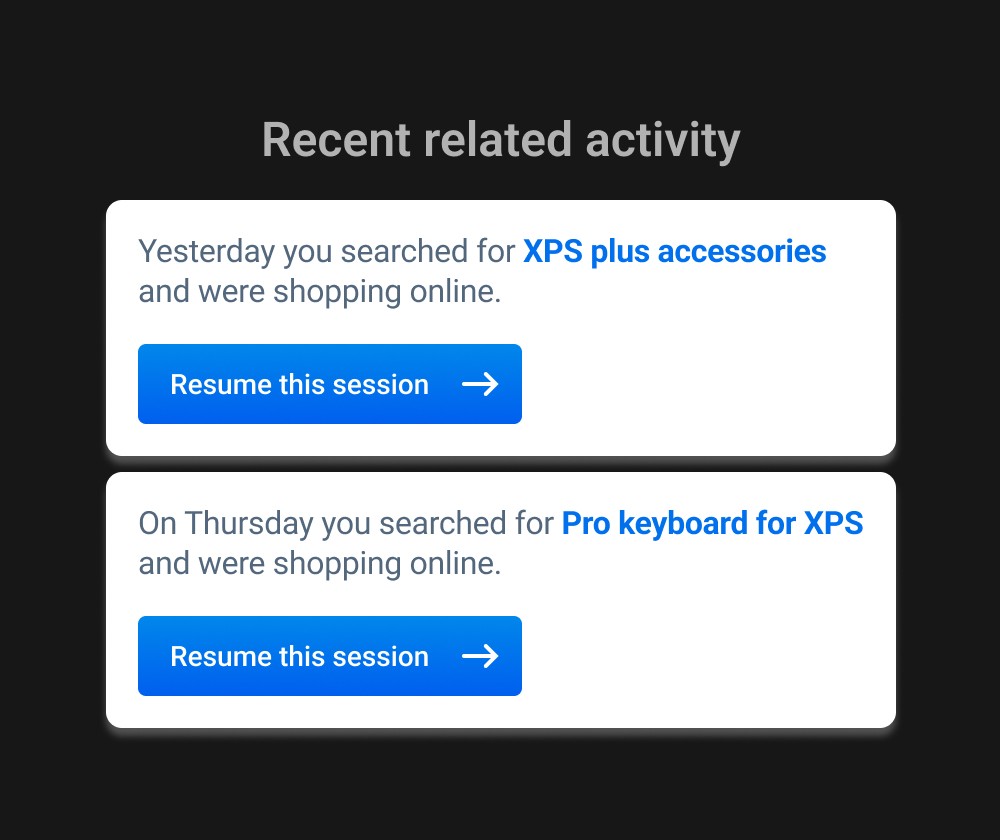
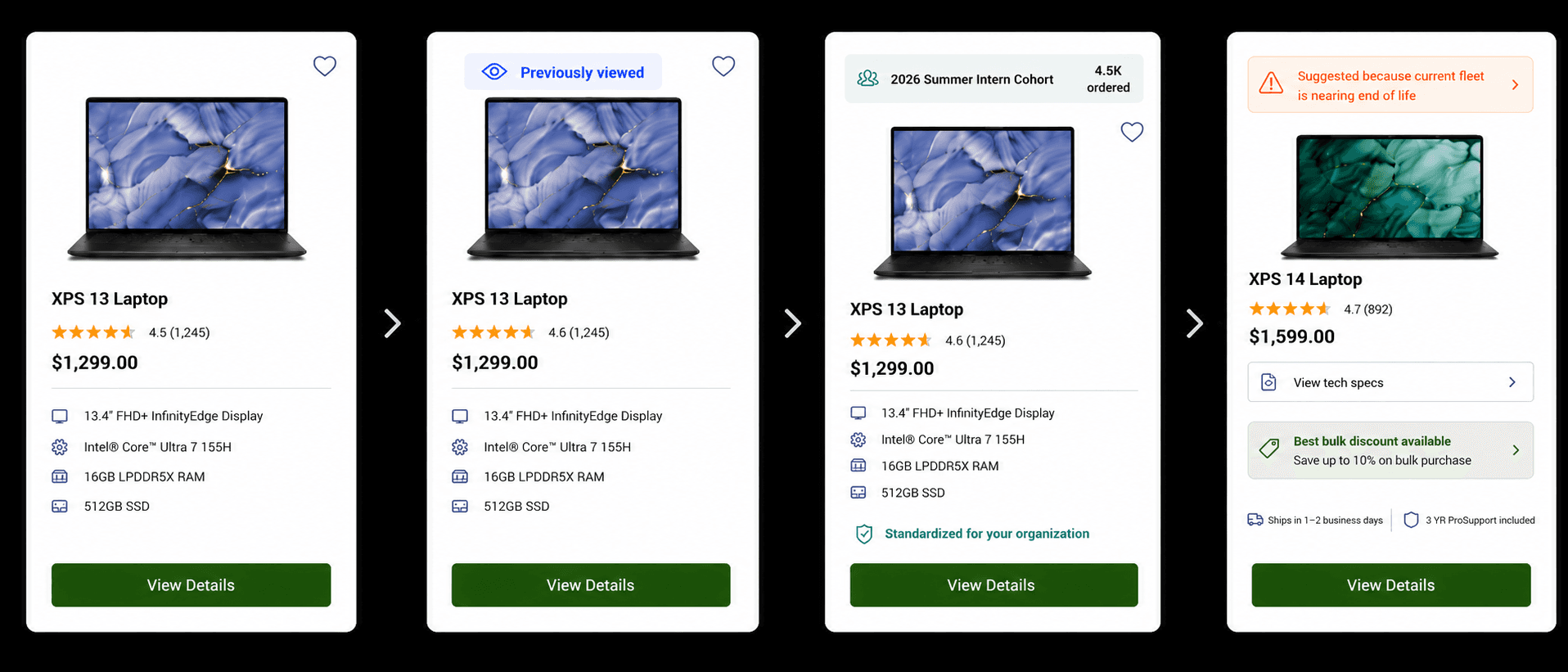
To build a truly predictive search experience, we must transform raw data signals into actionable UI adaptations. The underlying personalization engines should capture user's signals at each point in their journey. Using the same signals that reveal intent, we adapt results, content structure, and UI to match the task at hand. The result is a proactive task assistant that clears the path toward the goal, ensuring the right content is delivered at the precise moment of need.
A flexible and scalable content architecture and strategy
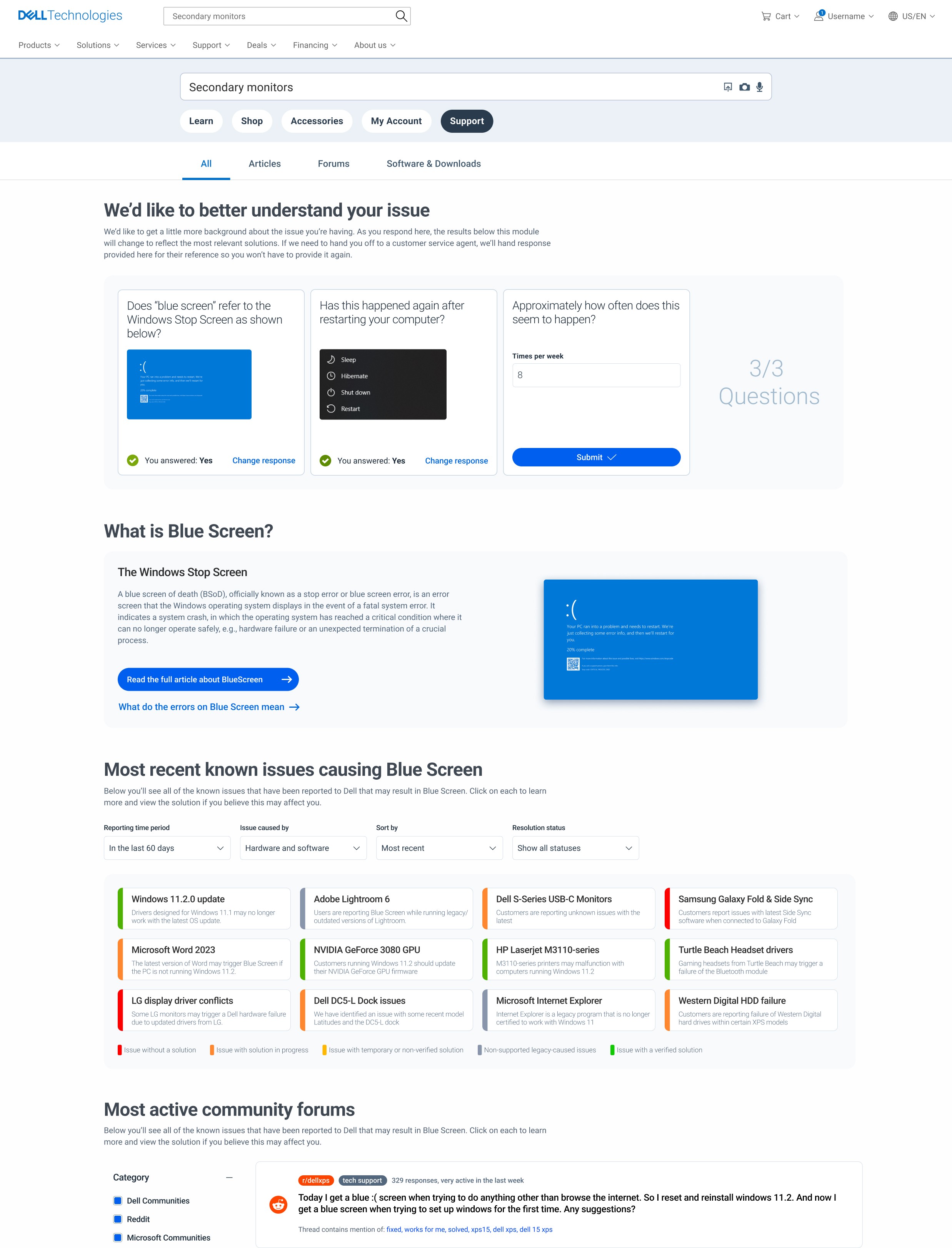
We figured the best way to serve up the most relevant content to every user was through a flexible content architecture, in which we can segment experiences around customer task or intent.

The Next-Gen Experience
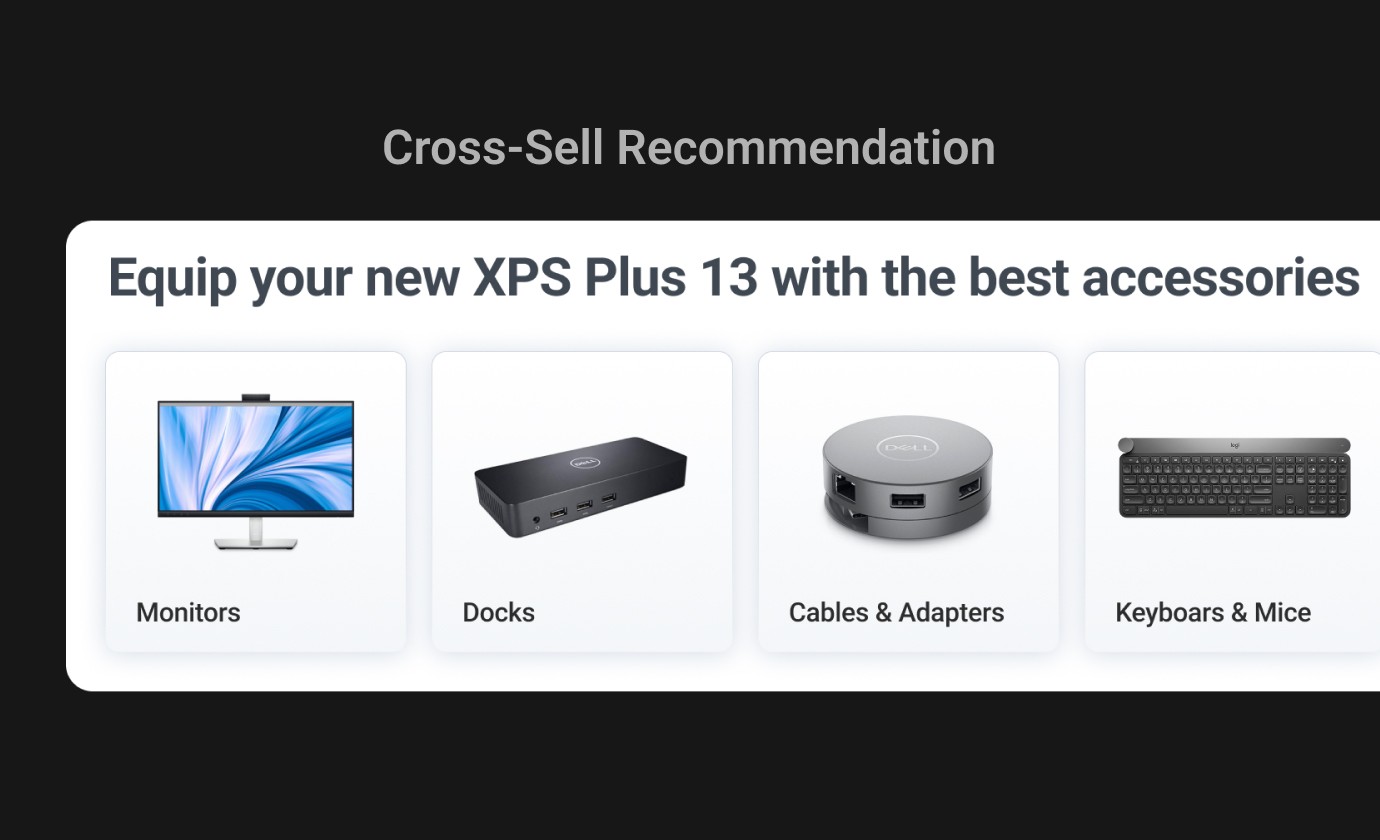
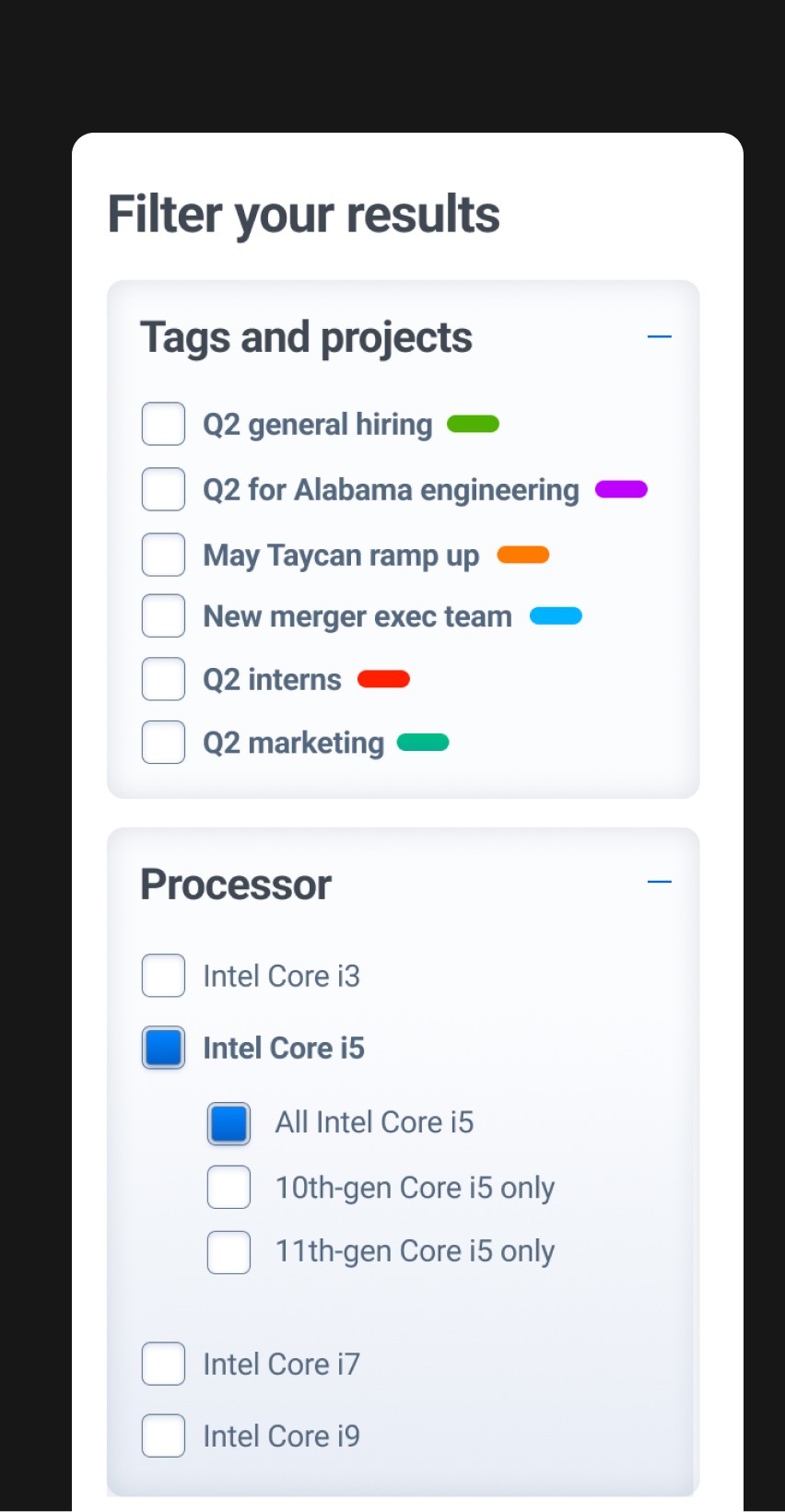
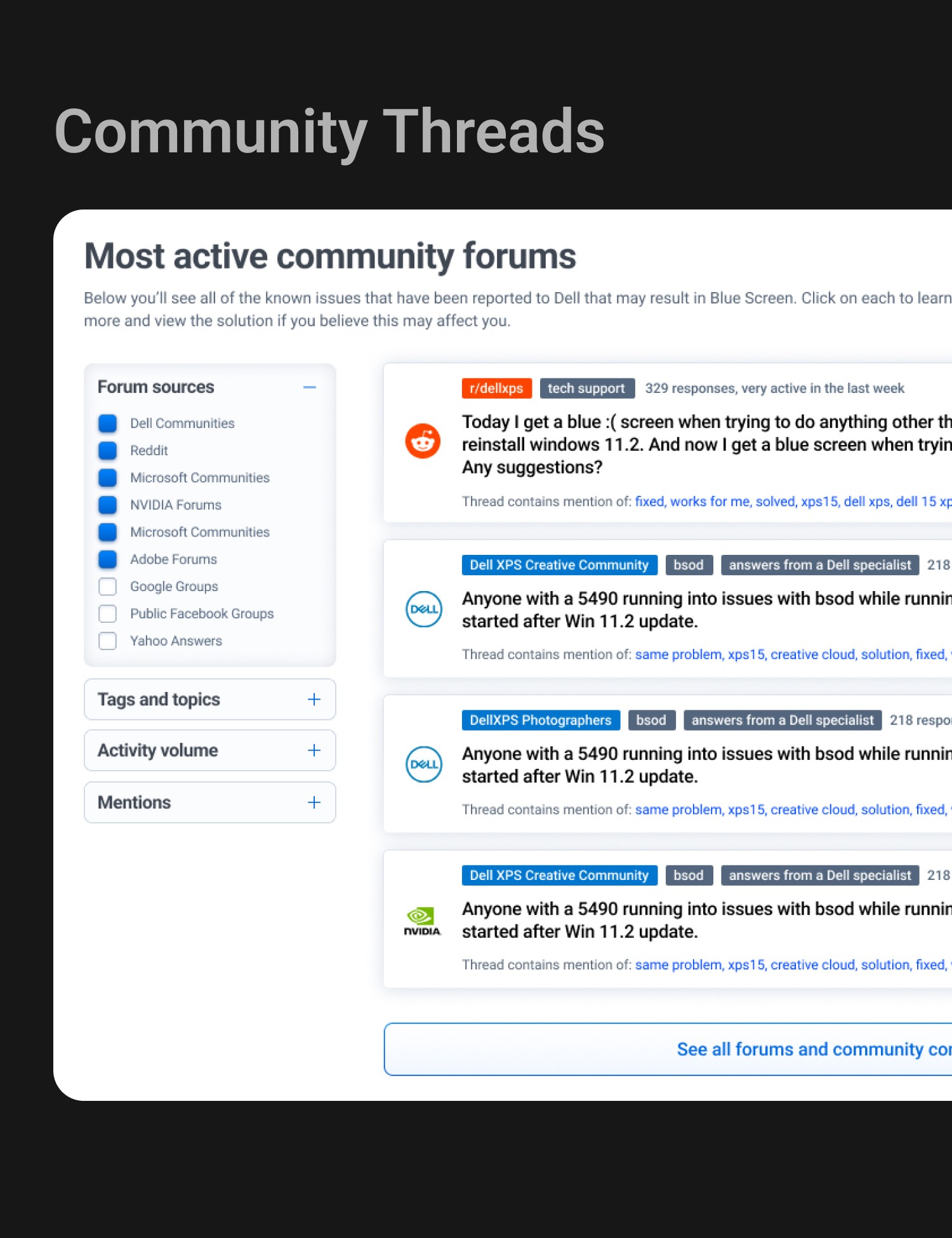
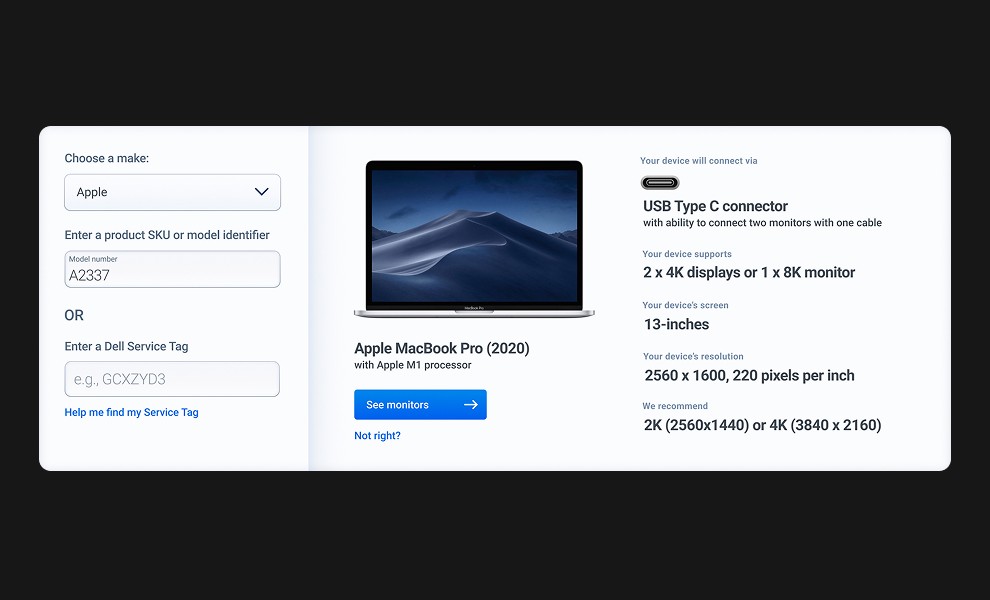
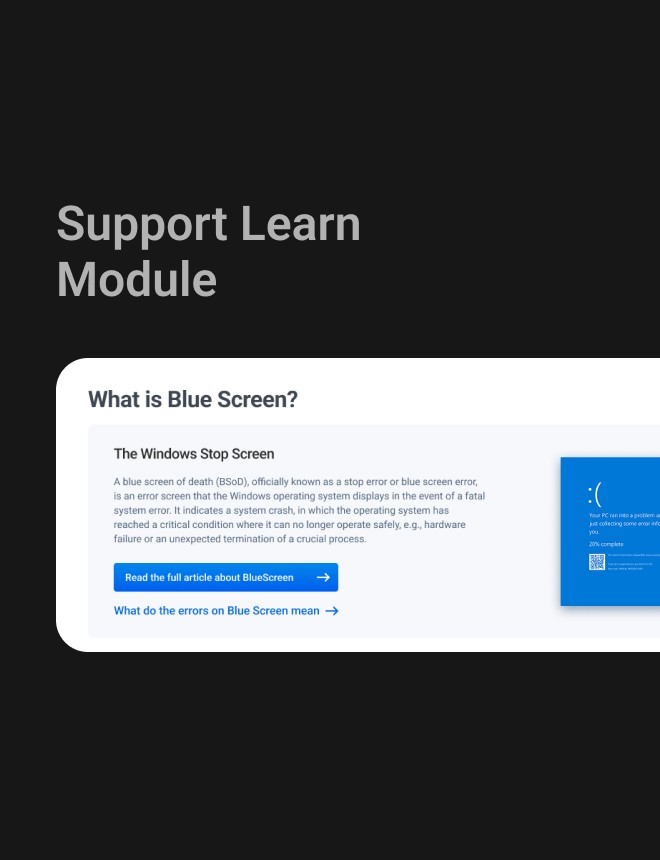
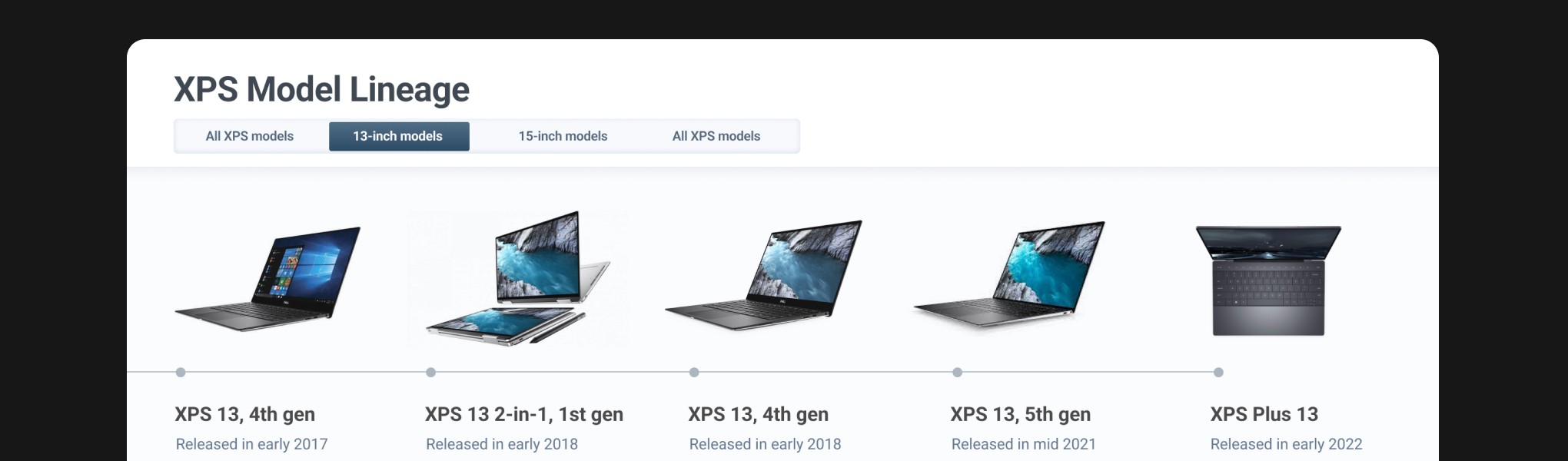
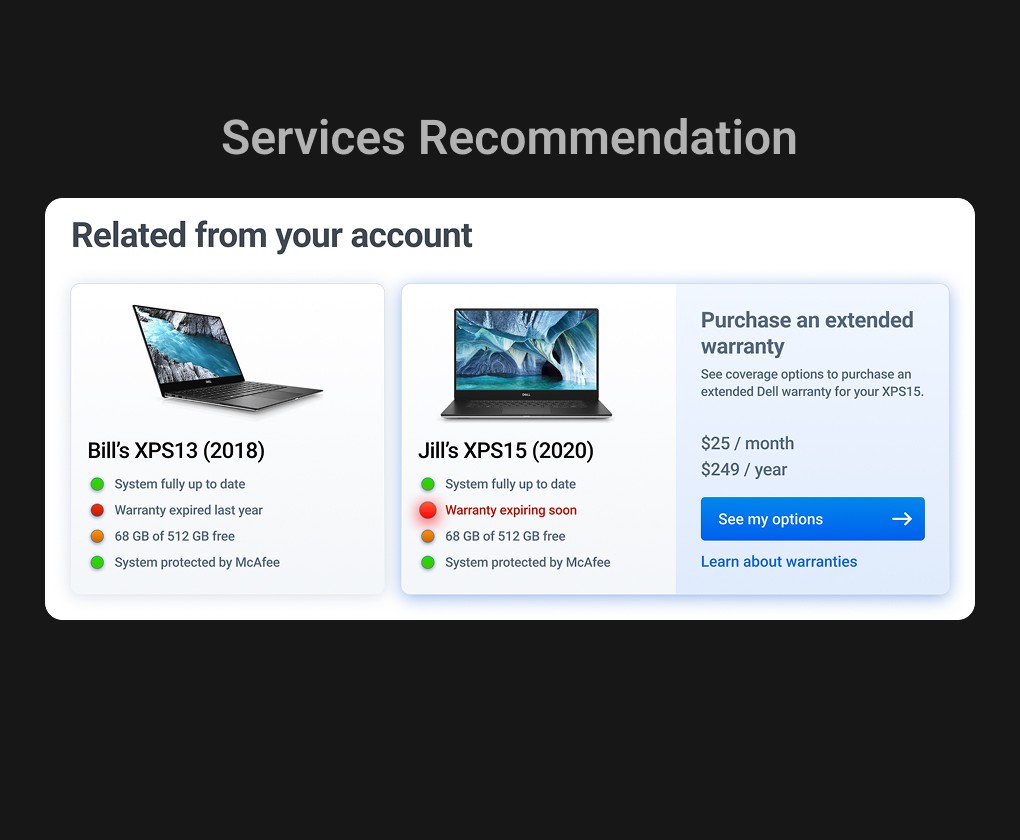
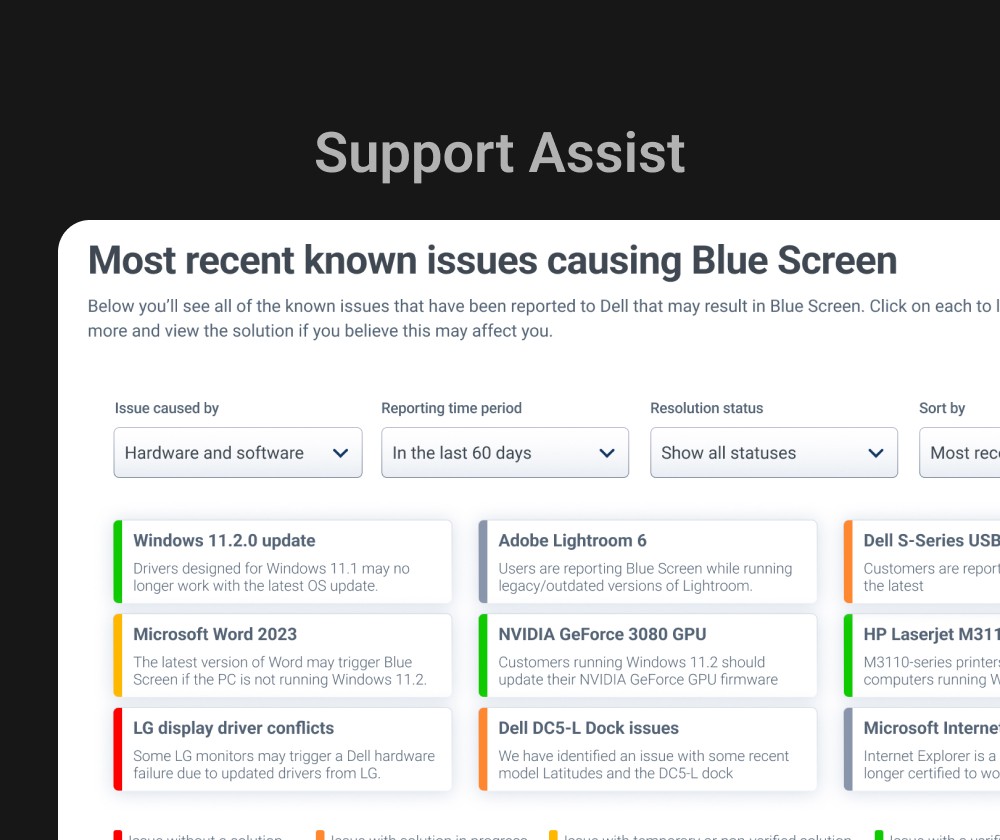
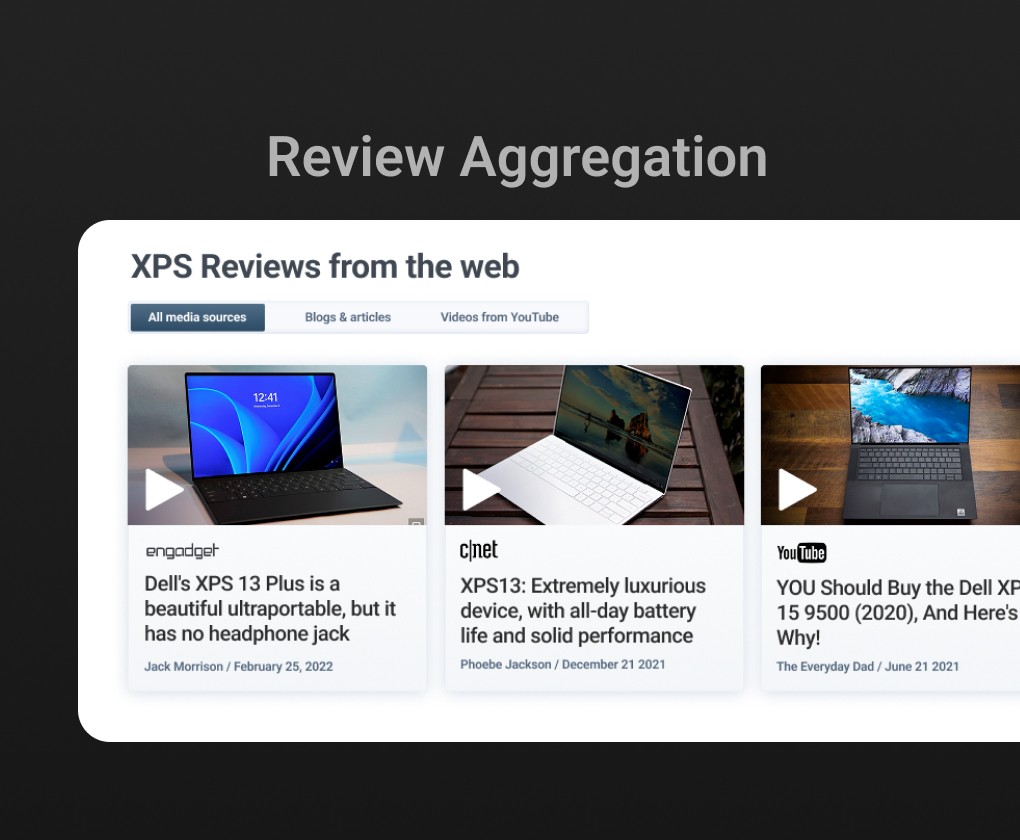
A modular micro-front end driven experience which could be mixed and matched to create a tailored context-aware experience.
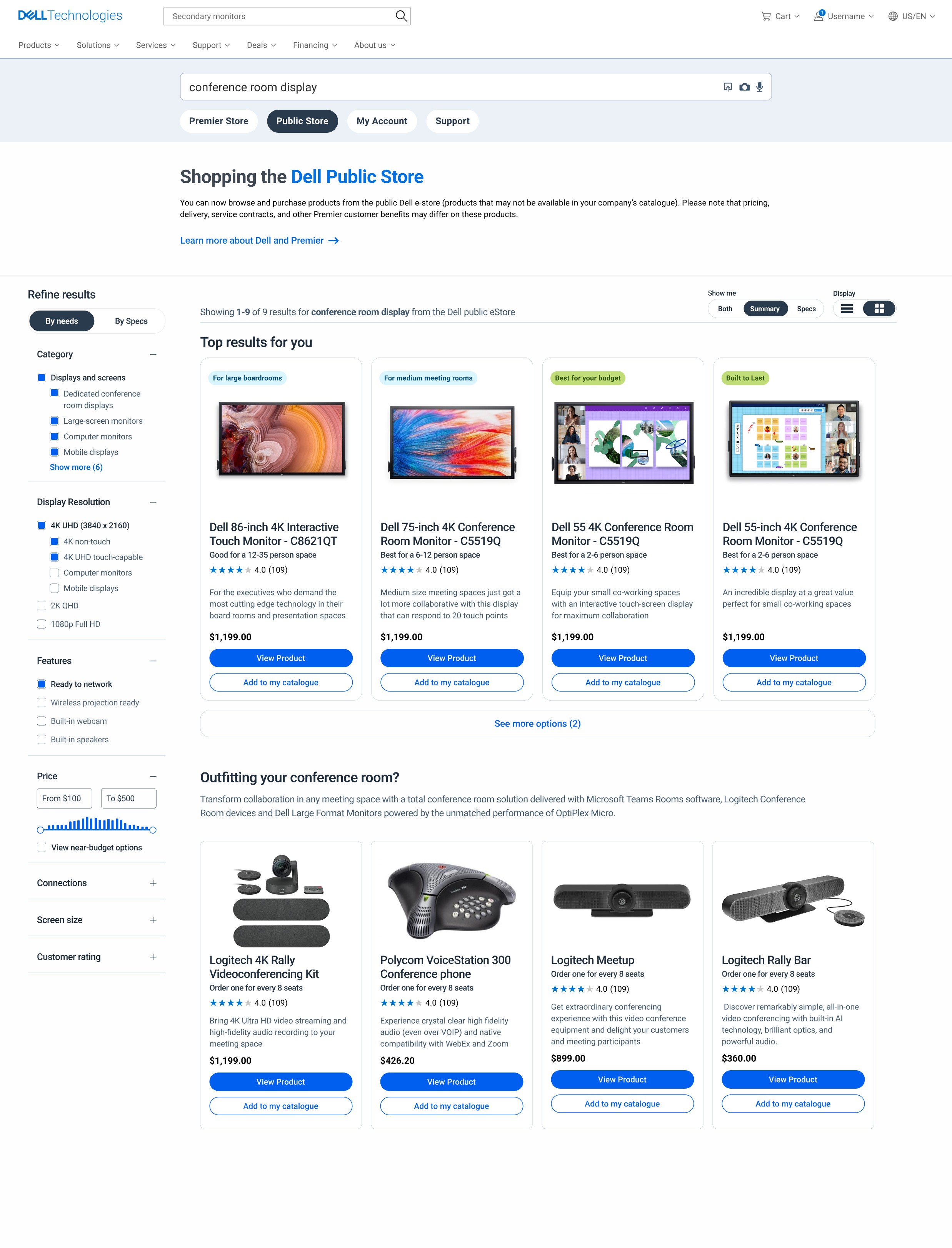


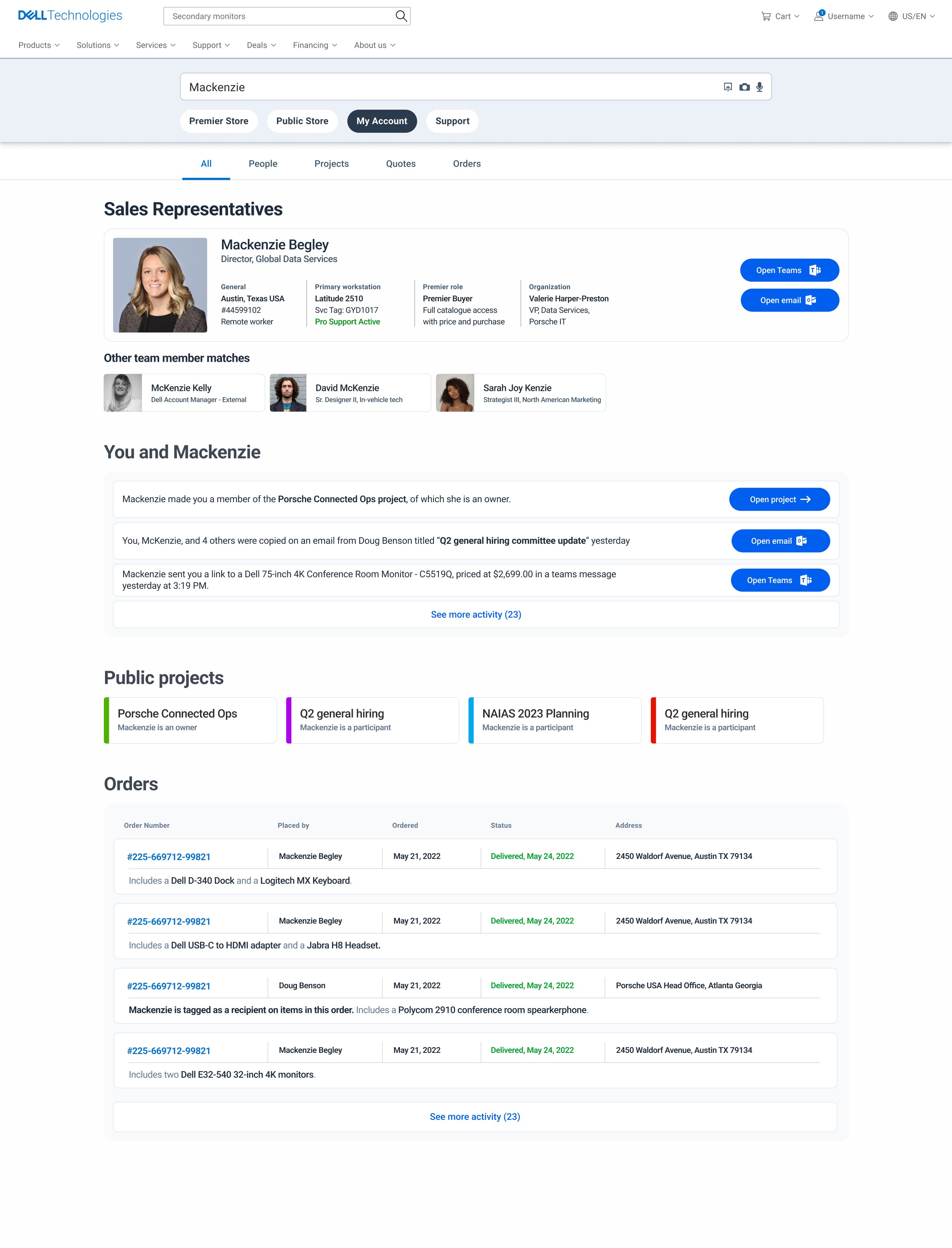
Unified Search UX strategy was well received and served as a blueprint for future search projects
This approach to the UI was hugely impactful to actual human users in our concept testing, who struggled with homogenous lists of text links, with many saying that being able to identify the kind of asset each link corresponds to was a huge timesaver and allowed them to zero in on exactly what content would best serve their task at hand, and quickly and efficiently move on to the next step in their journey through Dell’s online ecosystem.
The most effective approach to serving relevant content to every user was a flexible content architecture that could segment experiences around customer task or intent. The next phase involved engineering feasibility assessments and proof-of-concept work with vendors to bring the experience to life.
Design highlights