.png)

This project was recognized for it's efforts to manage complexity, optimizing user decision making.
View NominationOver the course of six months, I led the end-to-end effort to unify Dell’s four different product configurators into one cohesive, flexible experience.Our goal was to make customization simple, intuitive, and interactive—while reducing the decision fatigue customers often feel when faced with too many options.
The new unified configurator became a single framework that could handle all types of product customization across Dell’s portfolio.
The results spoke for themselves:
+5.2% lift in average order value
+7.4% lift in revenue per visit
This was one of the largest transformations in Dell’s e-commerce history, shaping how customers shop for PCs worldwide. I started as part of the Advanced Configurator team and, over time, expanded my role to design the entire experience from start to finish.
.png)
.png)
.png)


.png)
.png)
When we started, Dell had multiple versions of its product customization pages—one for enterprise products, a newer “simple” configurator (internally called UPD), an “advanced” configurator (SOC), and a version for gaming products.
I was initially brought in to improve the advanced configurator, which supported about 15% of Dell’s product lineup. Over time, the UPD configurator became more capable of handling complex customizations. This led to a company-wide decision: move all complex product configurations into the UPD system, with the belief that better error handling would improve conversion rates.
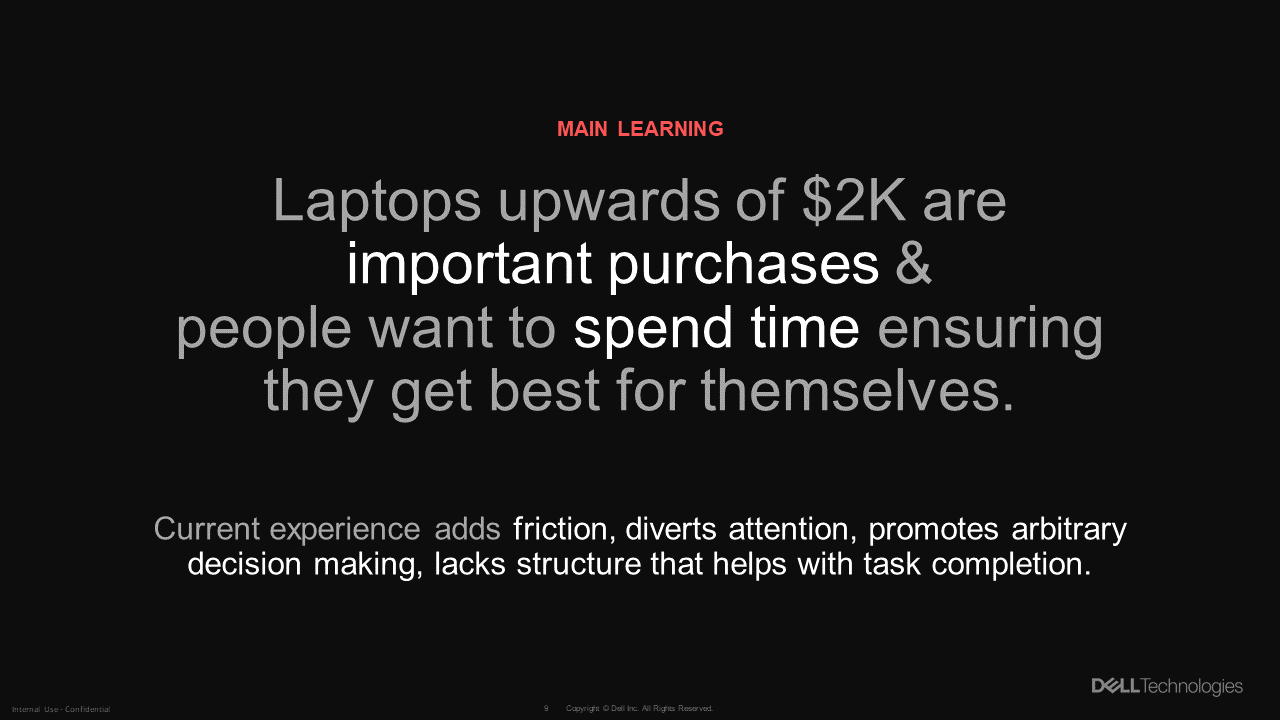
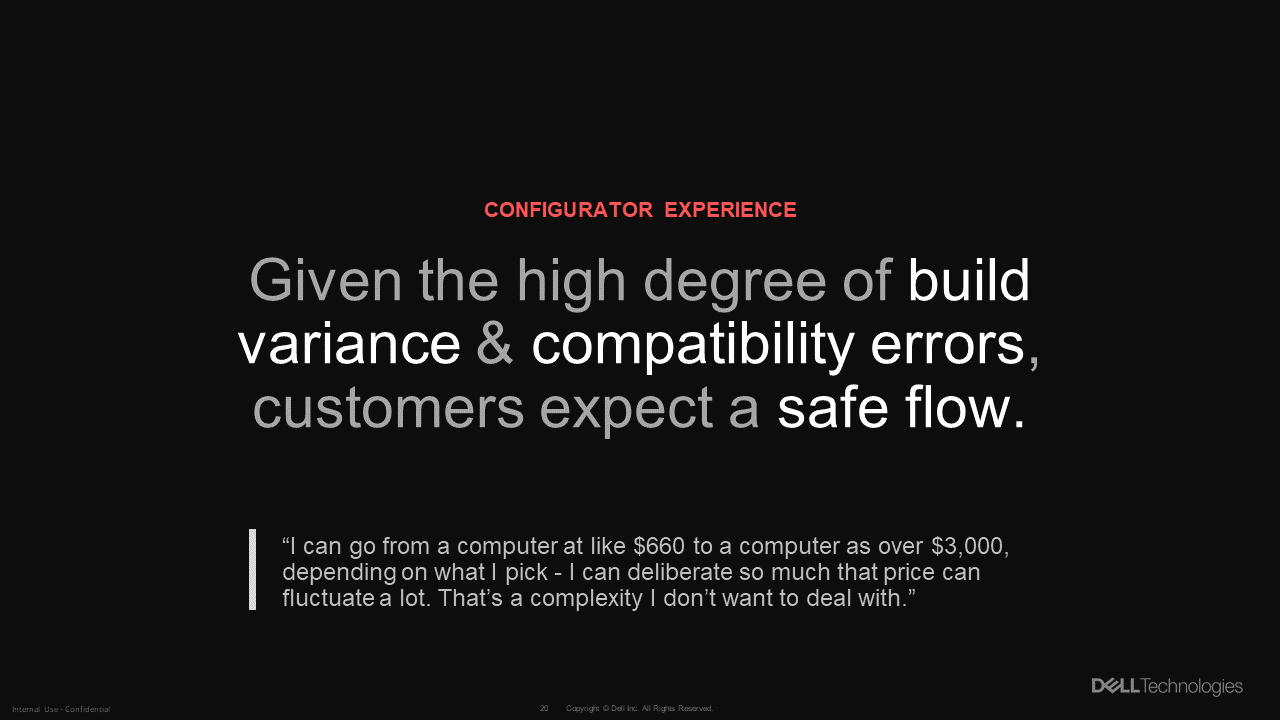
But research revealed a different problem. Customers weren’t just running into technical errors—they were feeling overwhelmed. Too many choices at once were leading to decision fatigue and, ultimately, drop-offs.
This insight changed our approach. Instead of simply moving products into a different configurator, we designed a unified framework that simplified choices without taking away customer control. By aligning the experience with how people naturally make decisions, we created a more tailored and consistent journey that could adapt to different customer segments—from gamers to enterprise buyers.
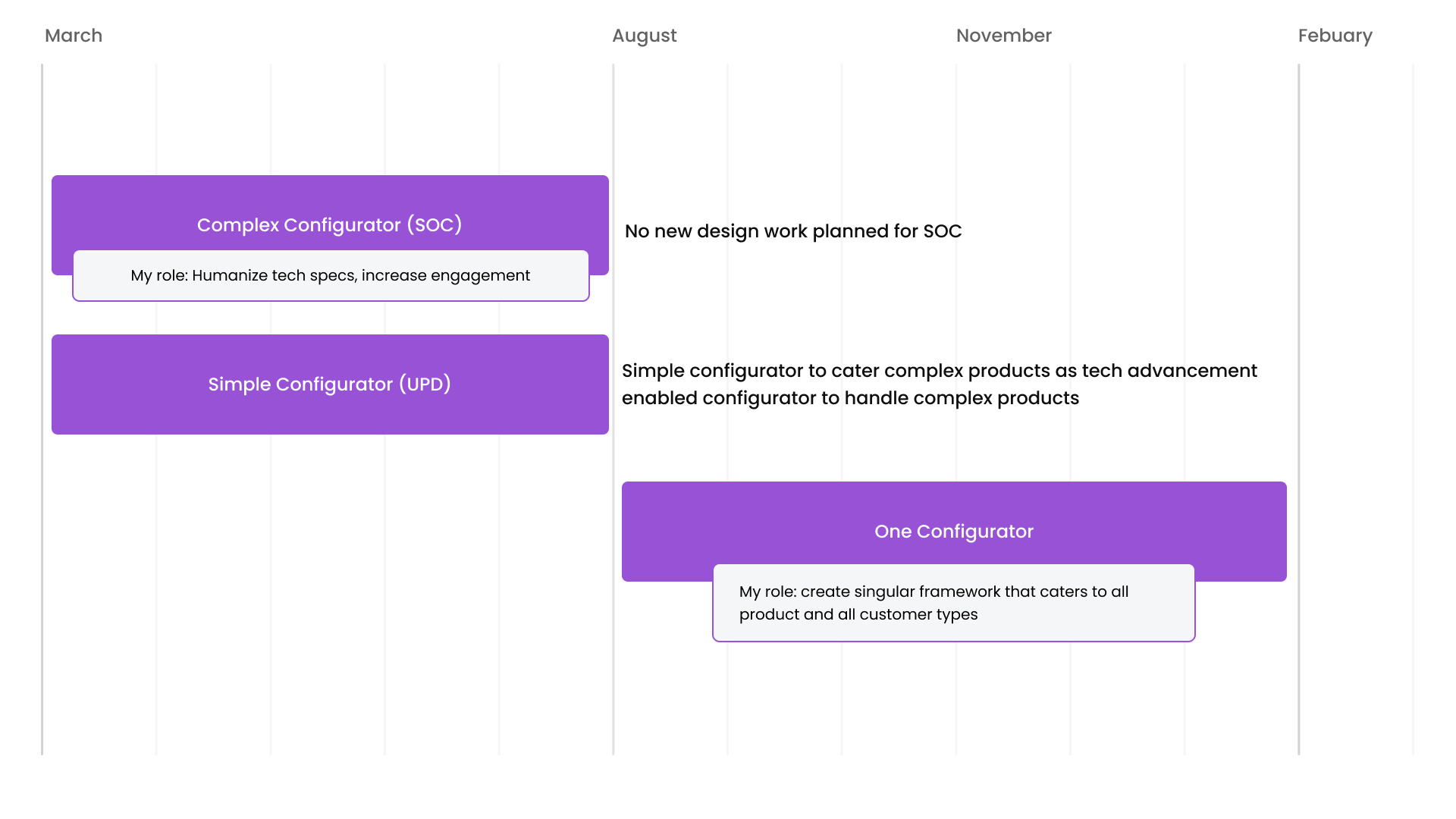
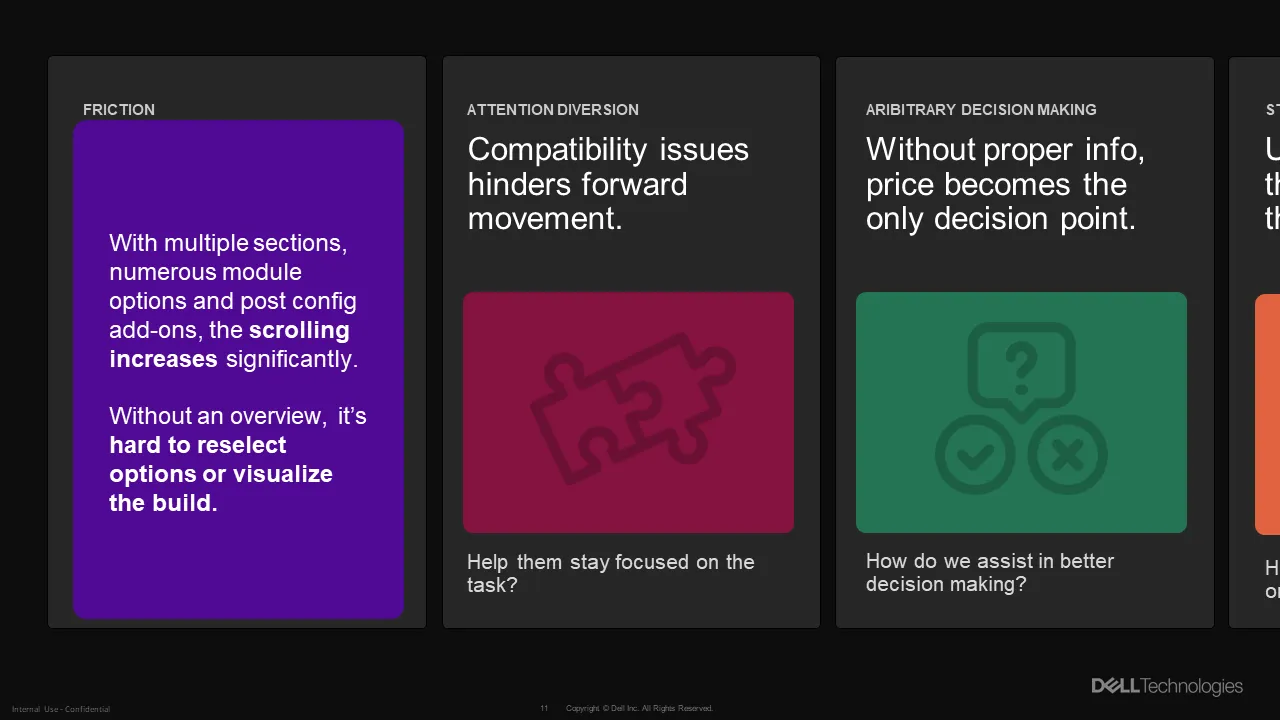
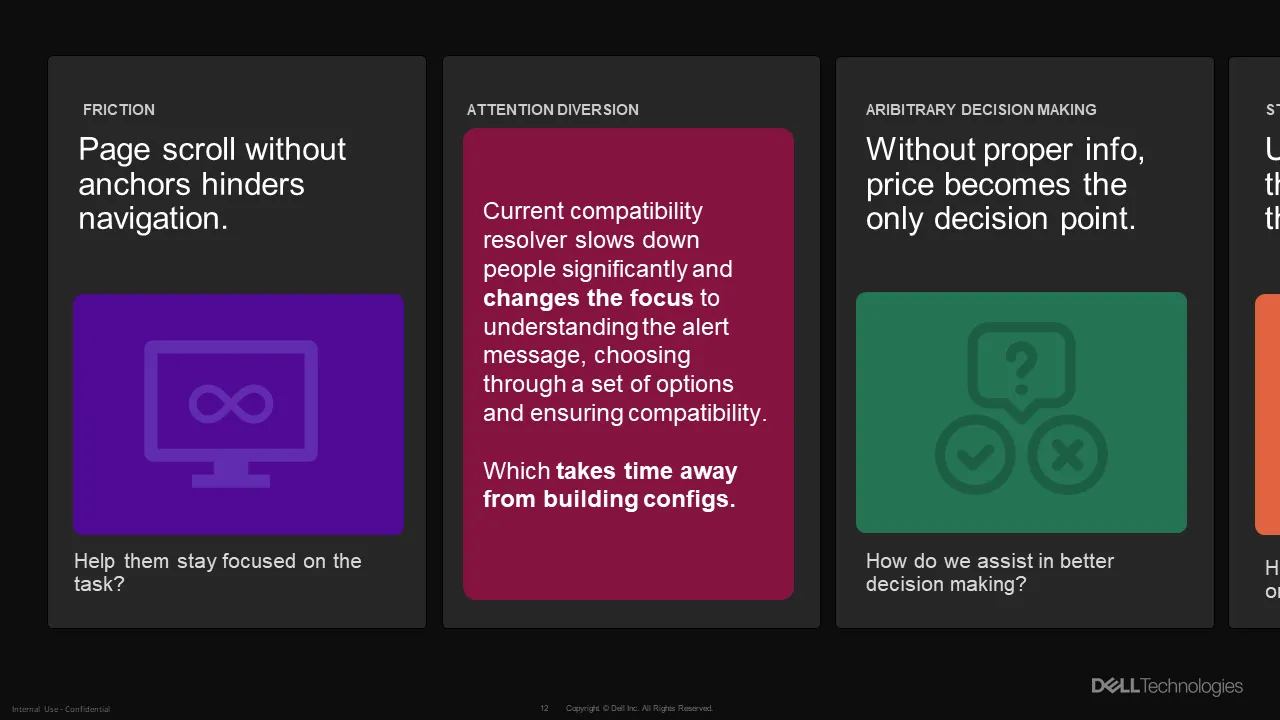
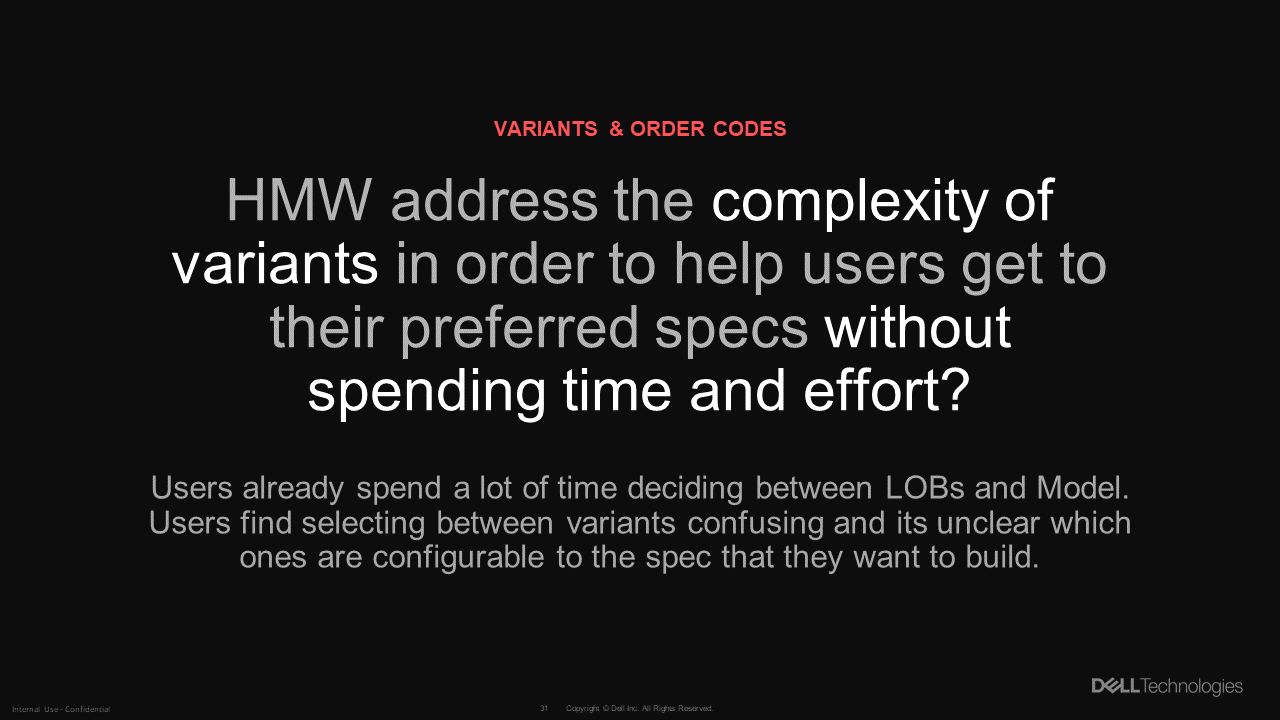
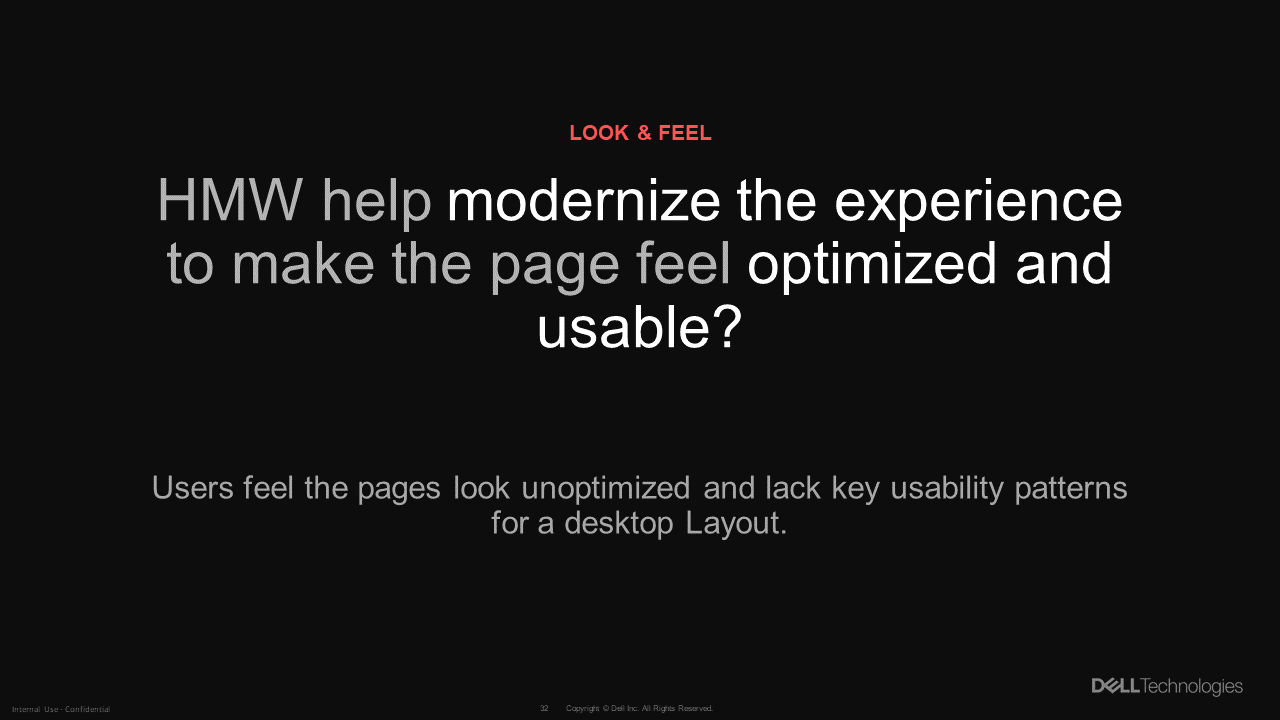
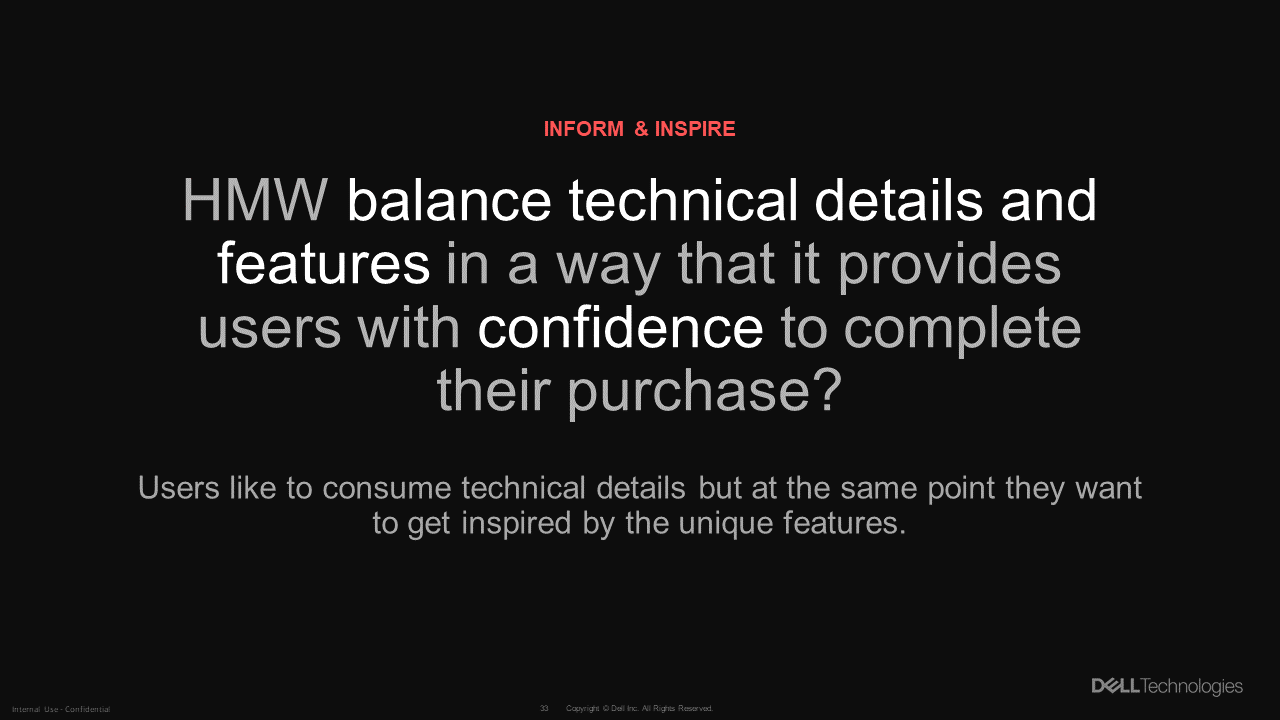
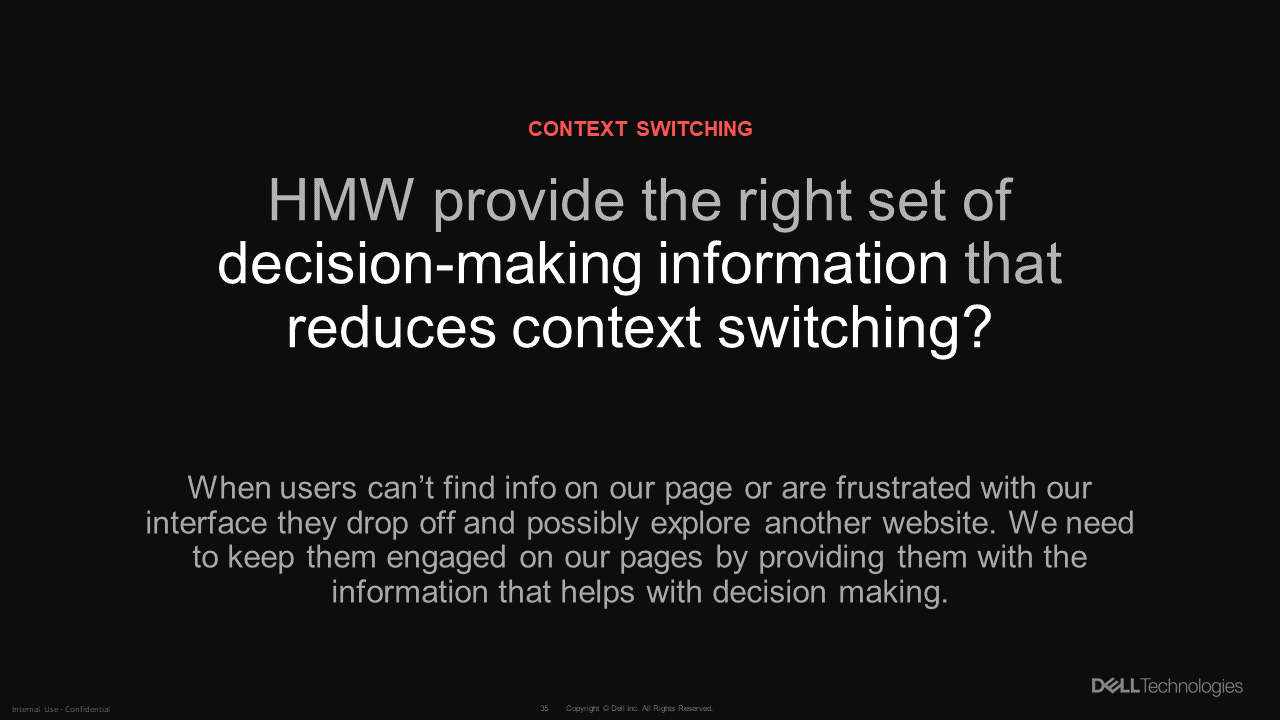
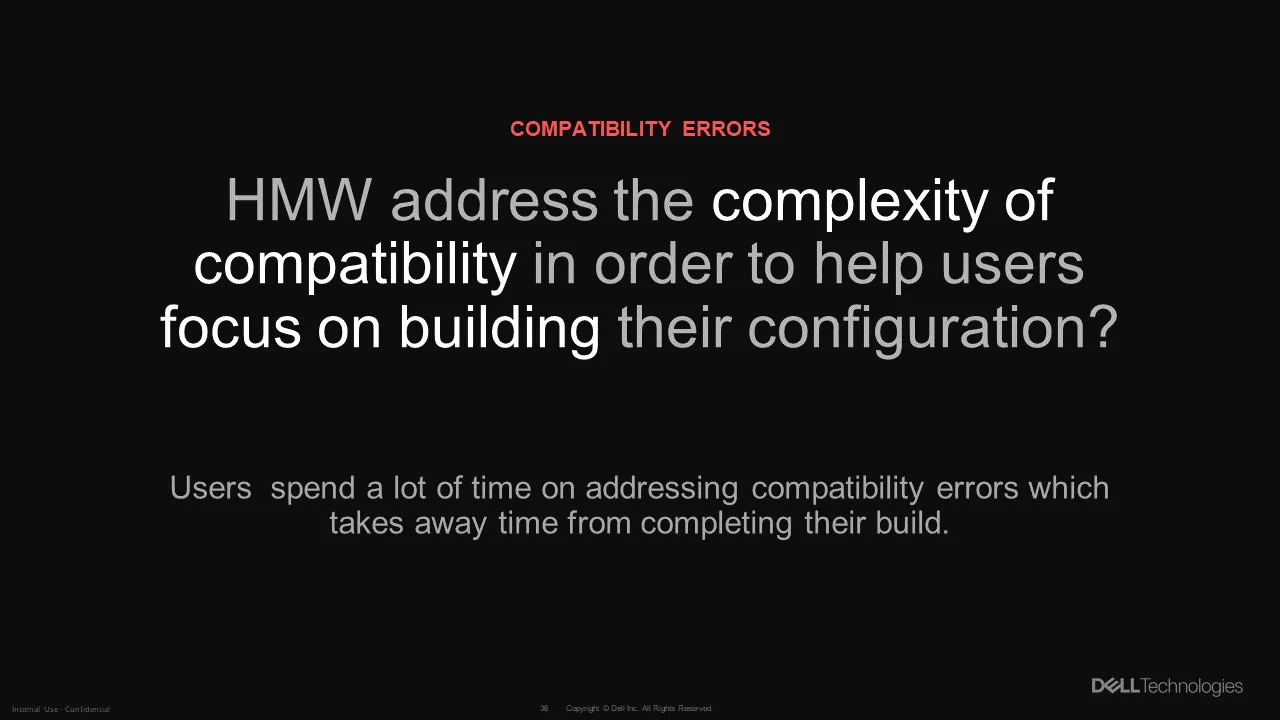
Dell’s product customization experience was fragmented—spread across multiple platforms with different processes for enterprise, gaming, and consumer products. This patchwork approach slowed our ability to respond to customer needs and made the buying journey unnecessarily complex. The configurator experience itself is confusing and causes a lot of friction due to too many choices and lack of decision-making information.
Our challenge was to take the most valuable learnings from the Advanced Configurator and unify them into a single, modular framework—one that could simplify decision-making, maintain user agency, and adapt to special cases like gaming or Premier buyers.We anchored the redesign around three core questions:
1. How do we reduce decision-making friction while still preserving user control?
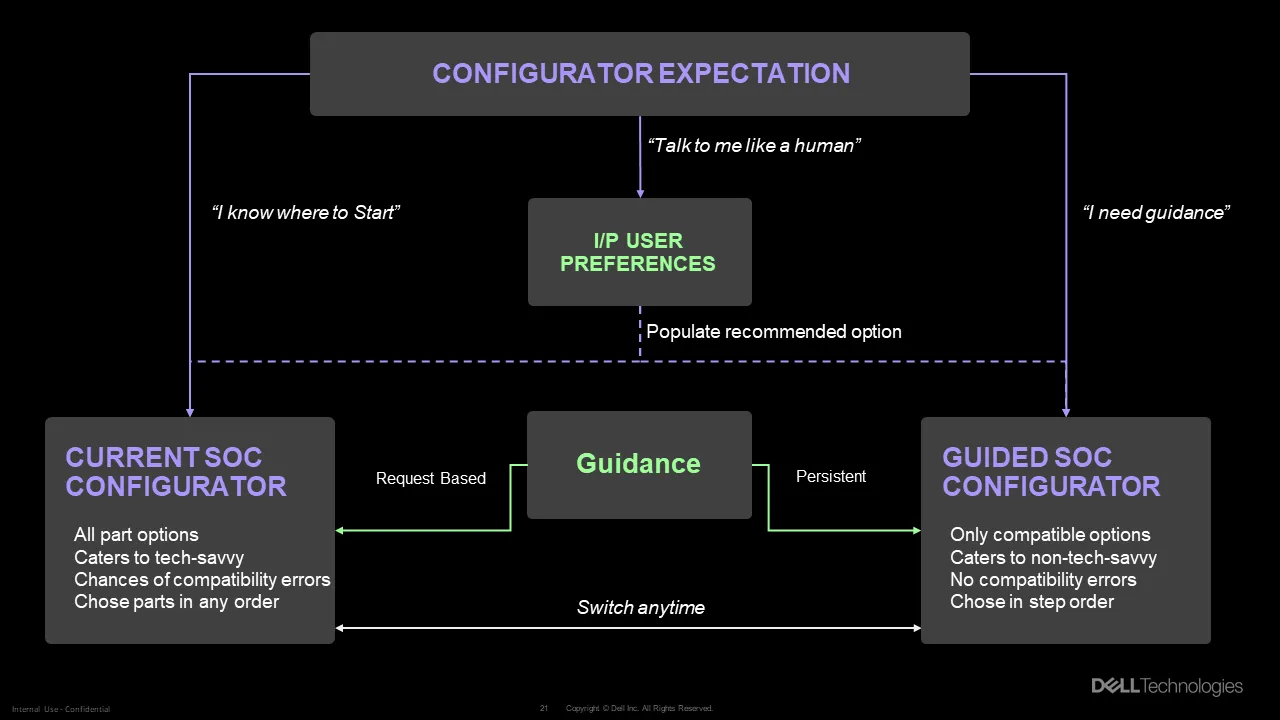
2. How do we allow easy movement between simple and advanced modes of customization?
3. How do we keep unique elements needed for special segments like gaming and Premier?
.gif)
A gif of the advanced configurator. The total possible configuration of some devices could go up to 7 Billion.
Present options in a clear, guided way so customers can make confident selections without feeling overwhelmed.
Consolidate all existing product customization tools into one scalable, adaptable system that works across all product lines—from consumer to gaming to enterprise.
Build a modular, flexible system that can evolve with new product types, customization needs, and business strategies.
Tailor guidance, language, and features to different customer segments (e.g., gamers, enterprise buyers) while maintaining overall consistency.
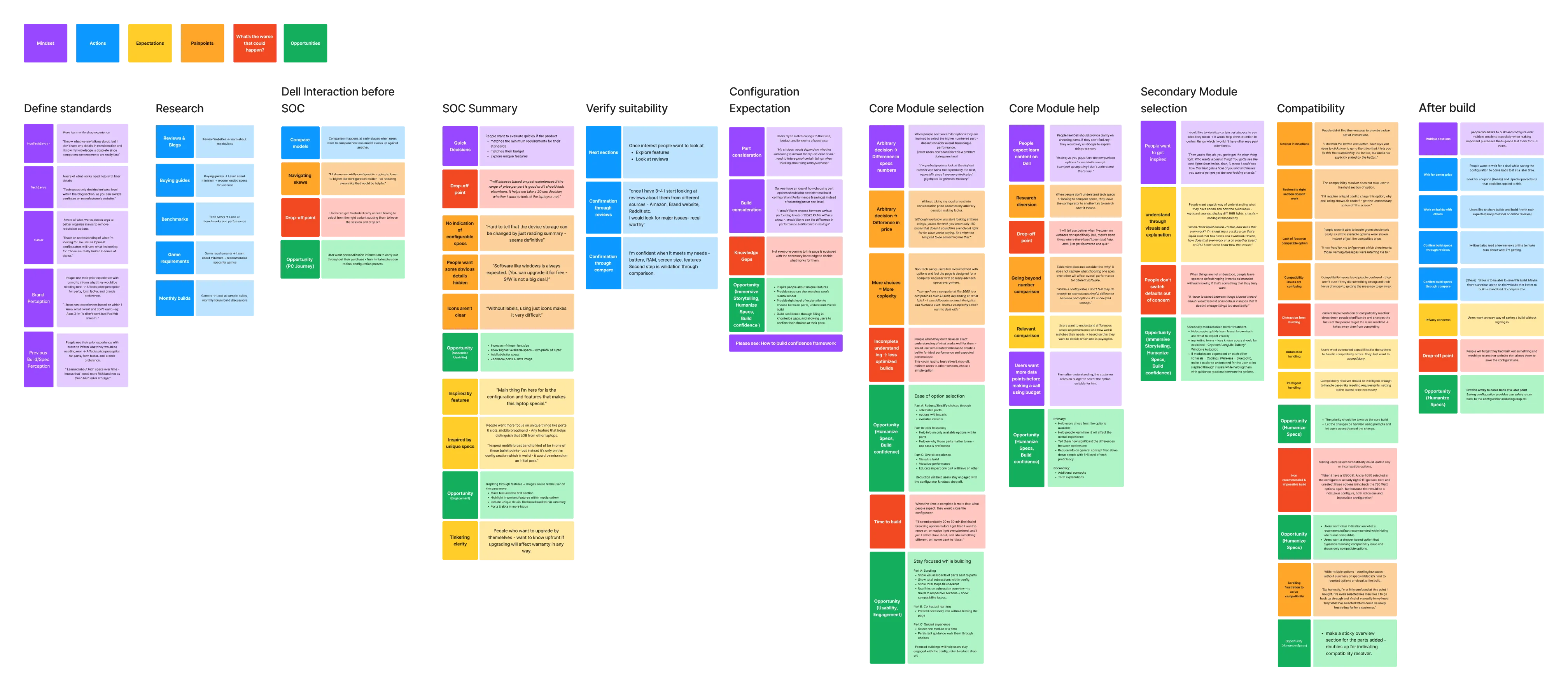
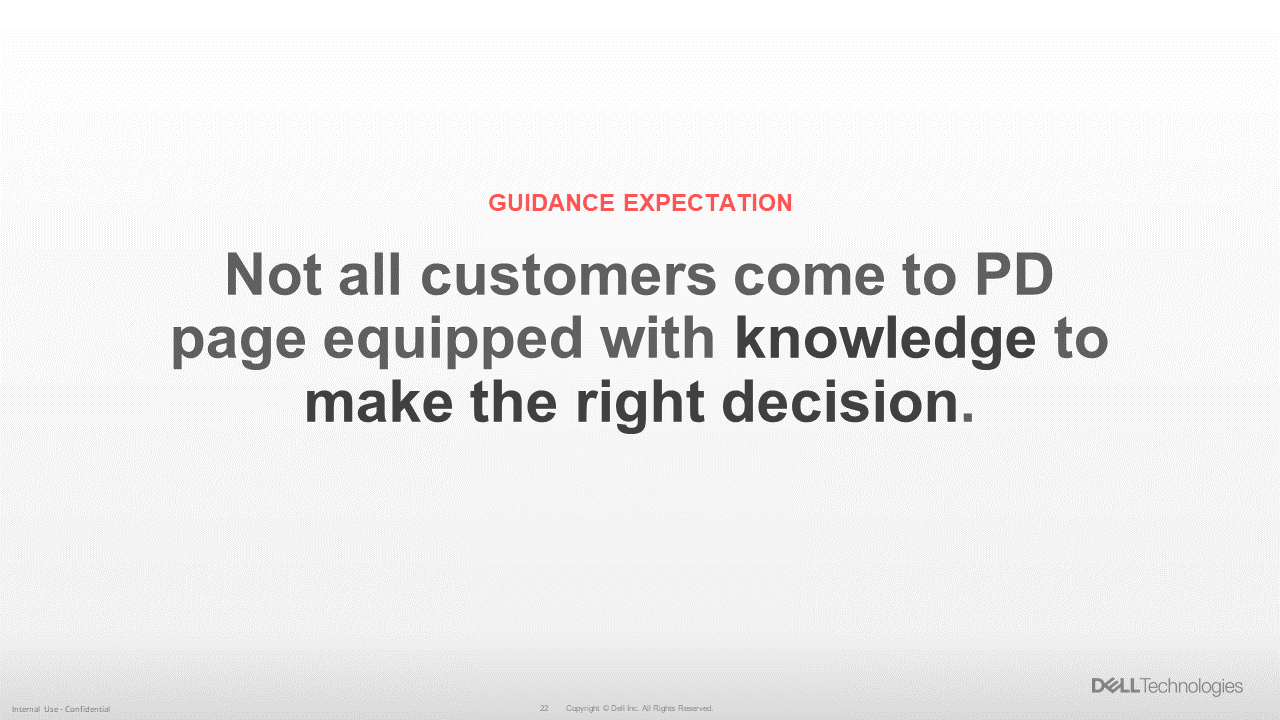
I began by improving the Advanced Configurator. The goal at this stage was to help customers feel more confident when navigating complex configurations. We conducted research to understand where customers struggled, uncovering that the challenge wasn’t just about feature complexity—it was about the decision-making process itself. Customers faced too many options without enough guidance, leading to hesitation and drop-offs.
As the company’s vision shifted toward One Configurator—a unified system for all product types—my role expanded. I moved from improving a single tool to designing an entirely new, modular framework that could handle everything from simple consumer products to advanced enterprise solutions.
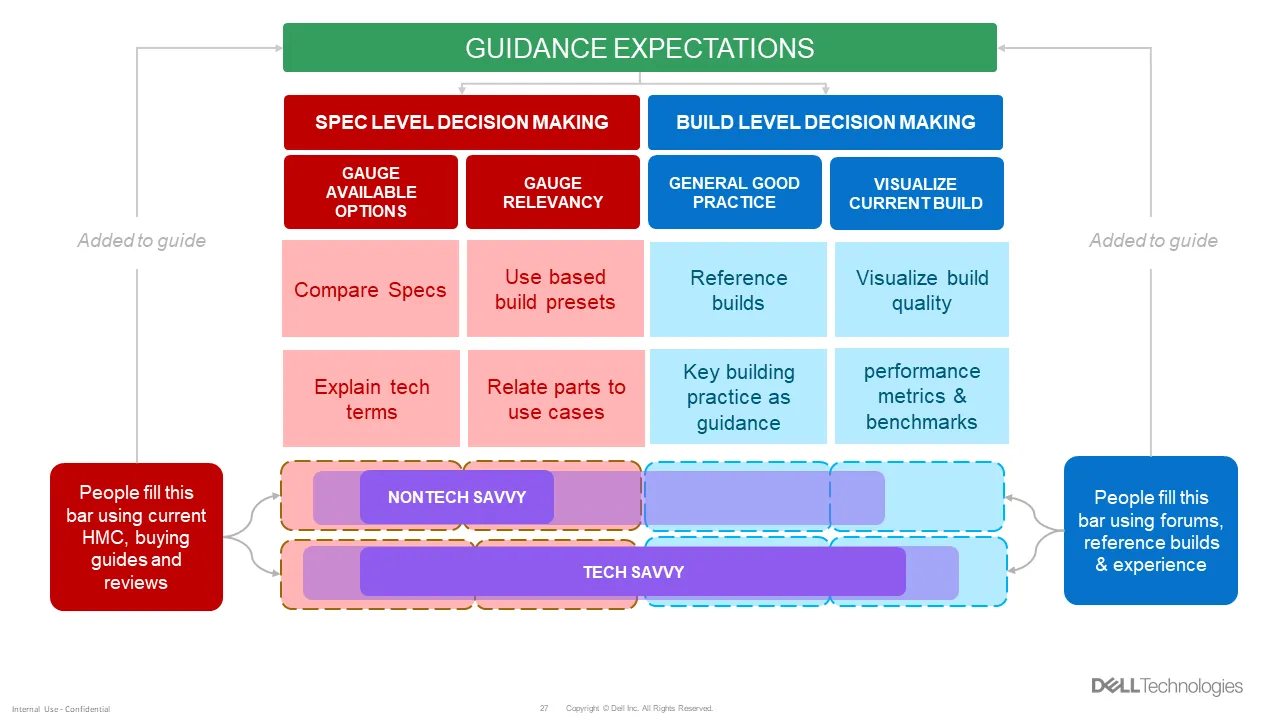
In this second phase, the research focus shifted to simplifying the shopping experience across all product types . The insights from my earlier Advanced Configurator research became the foundation for this new approach. Everything we had learned—about reducing cognitive load, structuring information effectively, and providing timely guidance—was carried forward into the unified design.
By blending Phase 1’s depth of understanding of complex configurations with Phase 2’s vision for simplification across the board, we created a framework that not only supported all customer segments but also adapted to their unique needs.
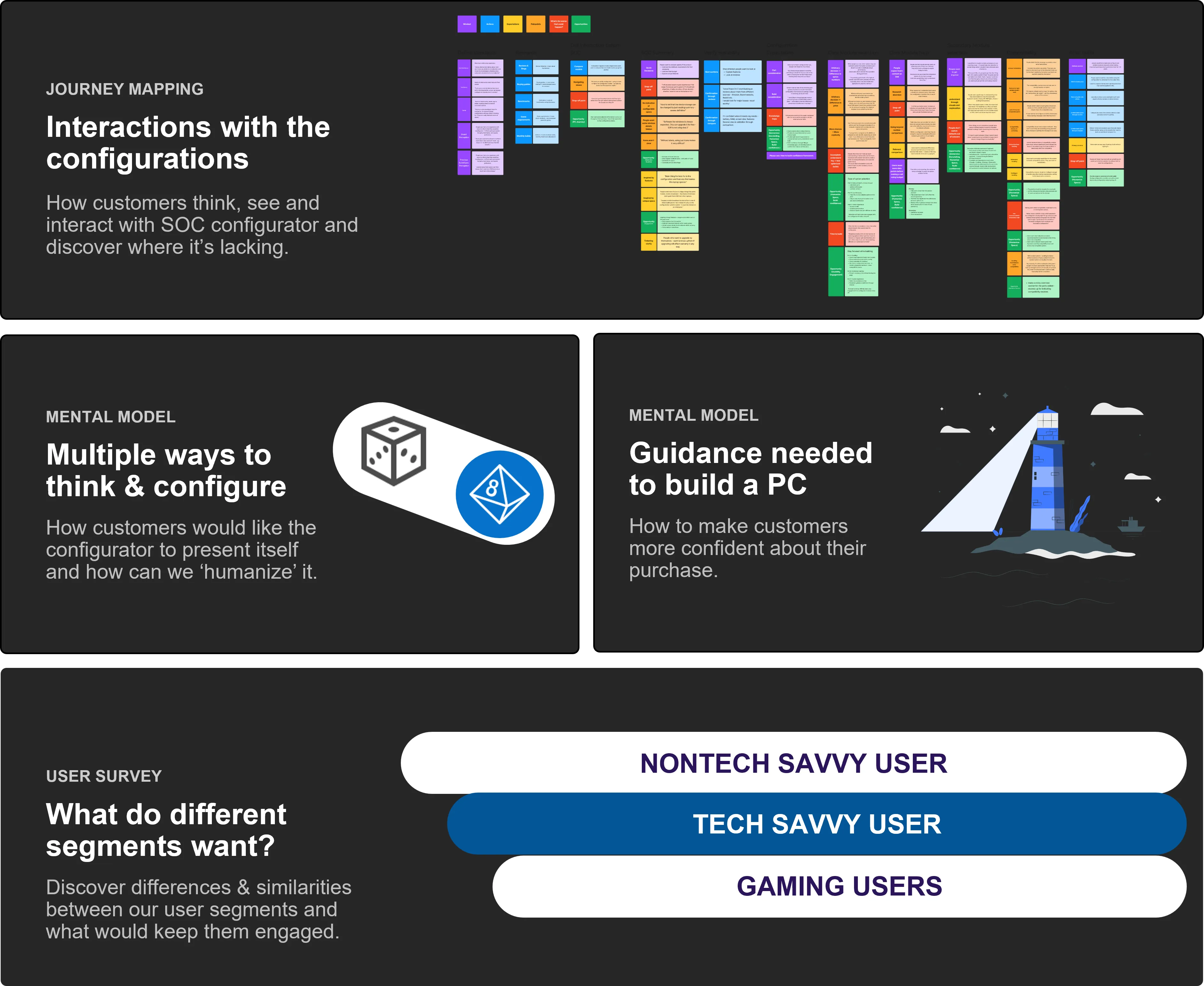
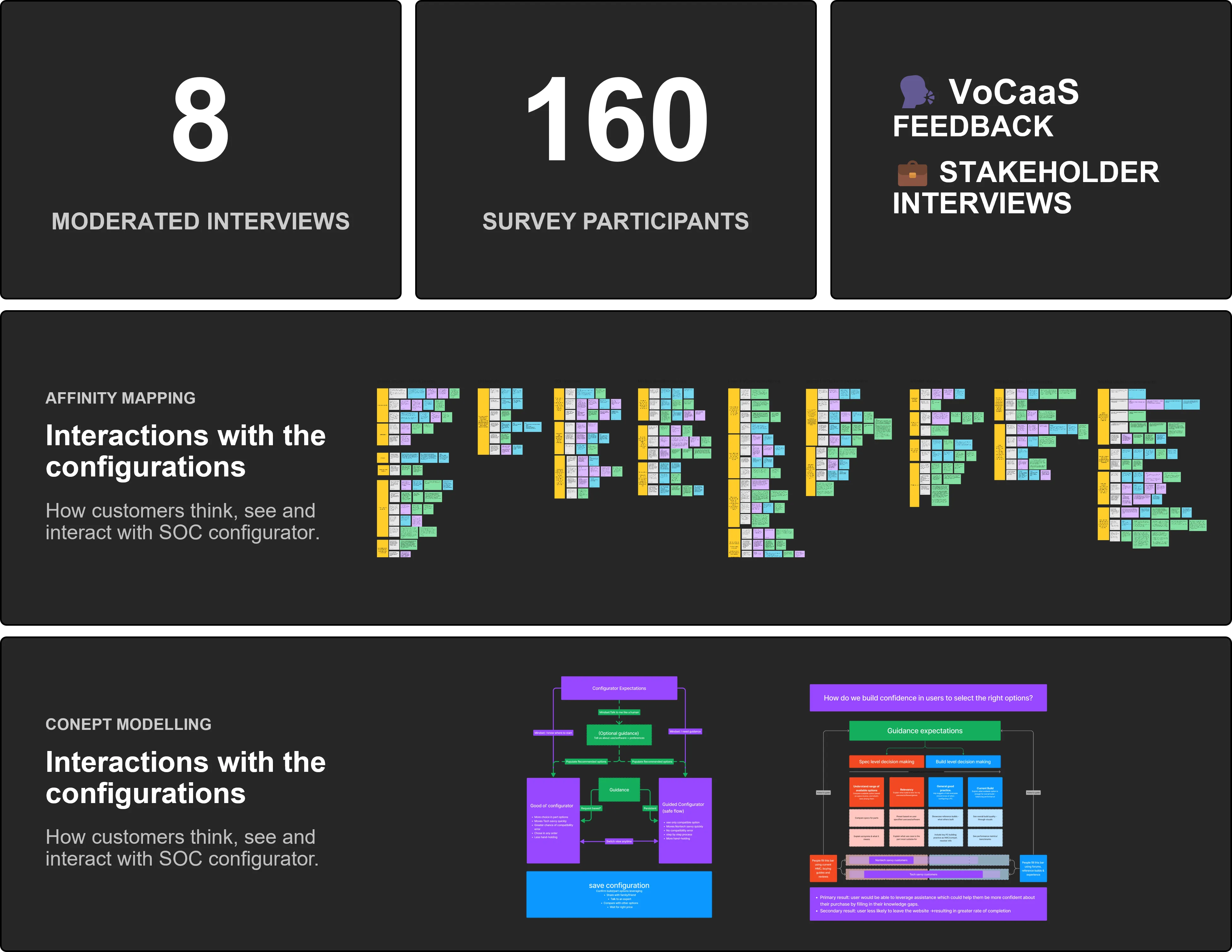
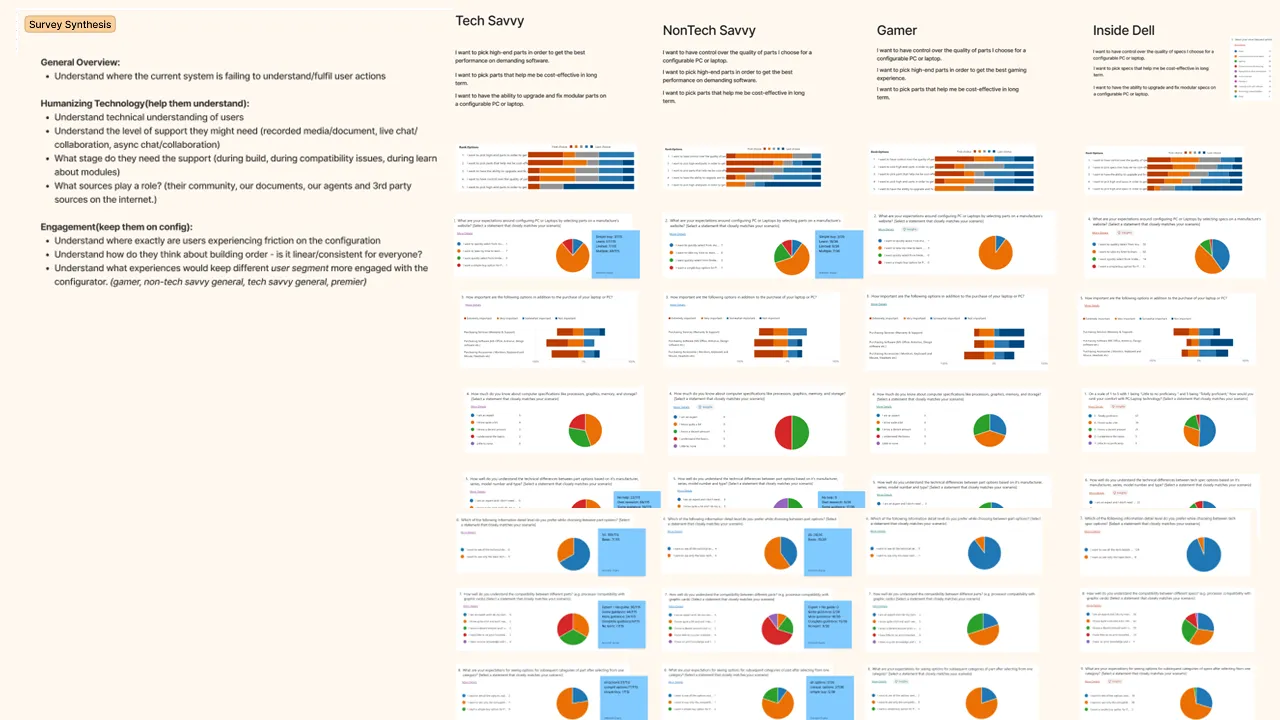
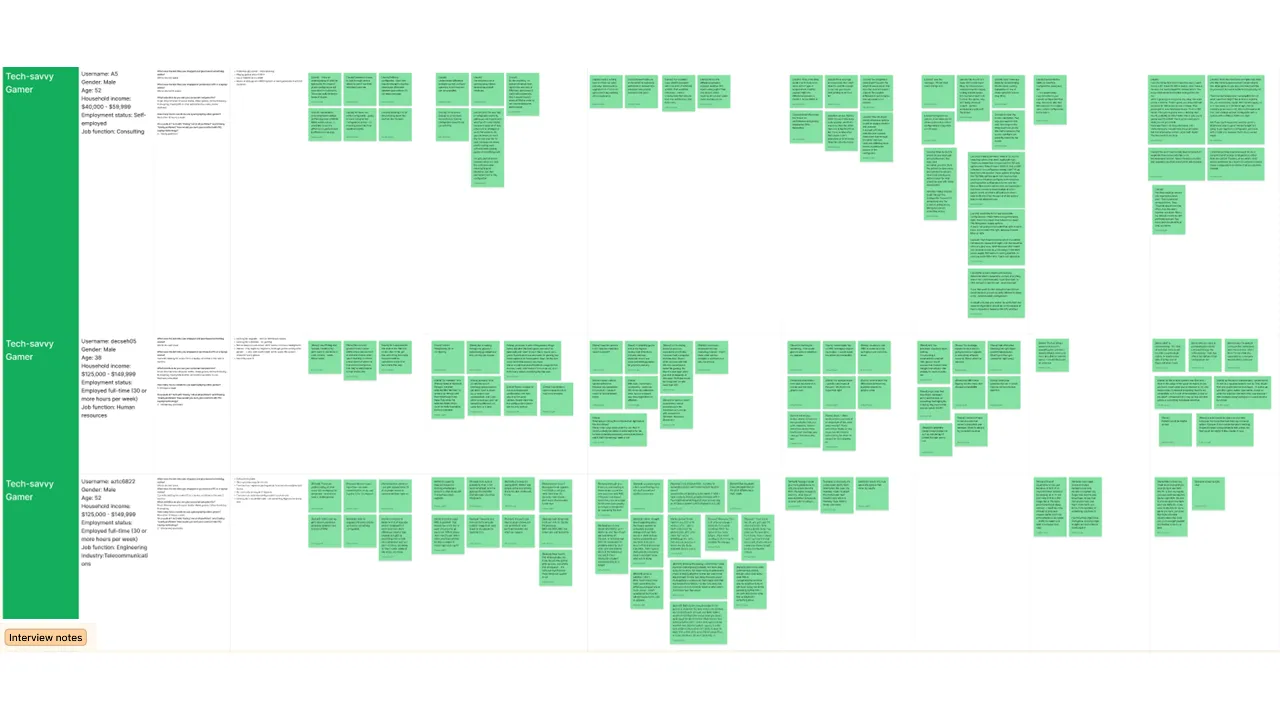
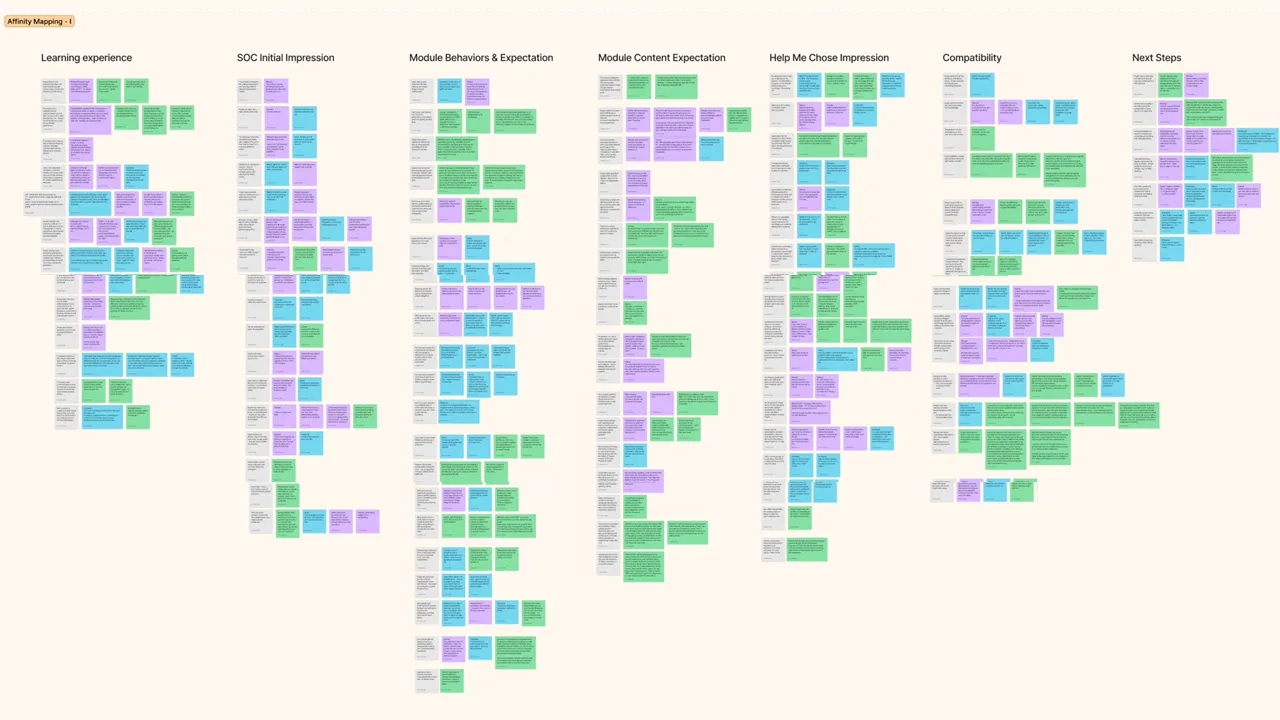
In Phase 1, I conducted eight moderated interviews, complemented by desk research and surveys. I then synthesized all findings into an experience map, a concept model, and a set of “How might we” statements to frame opportunities for design. The research from this phase informed the designs for the vision state.
When I transitioned into the unification effort, our priority became simplifying the product selection process for all customers—from first-time buyers to seasoned tech enthusiasts.We started by analyzing shopping behavior data to understand how customers were currently browsing, comparing, and making selections.
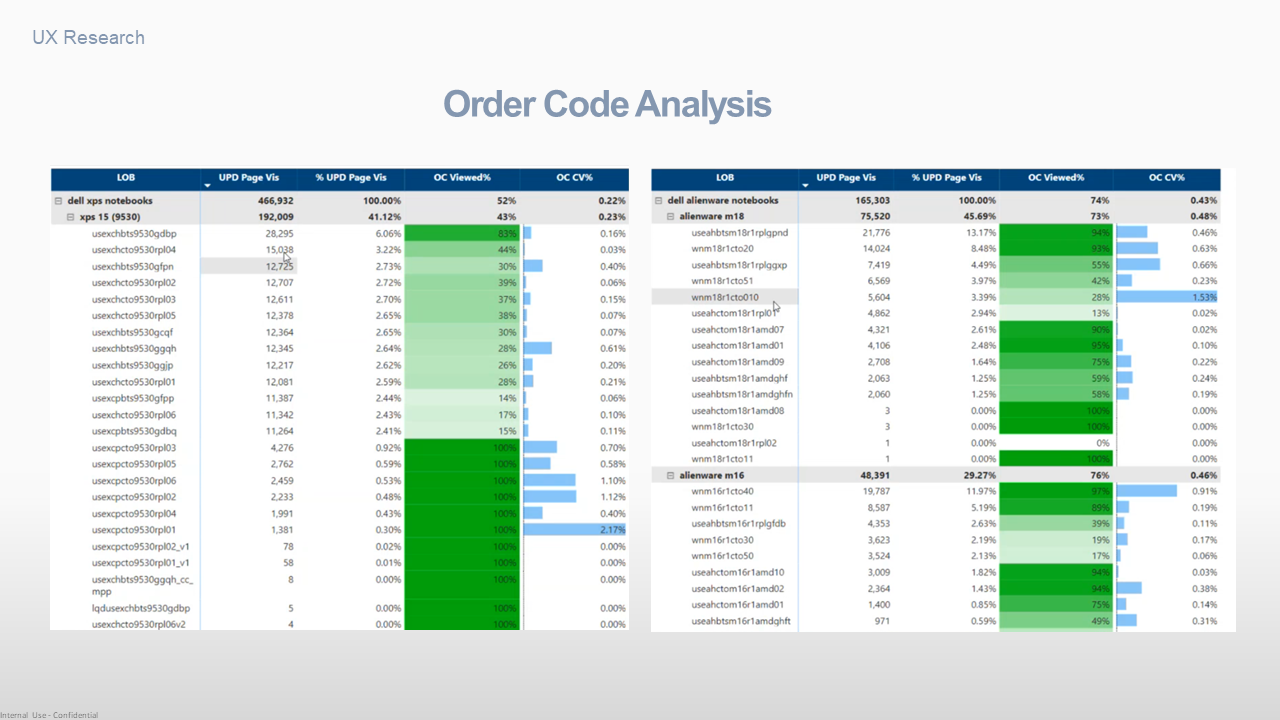
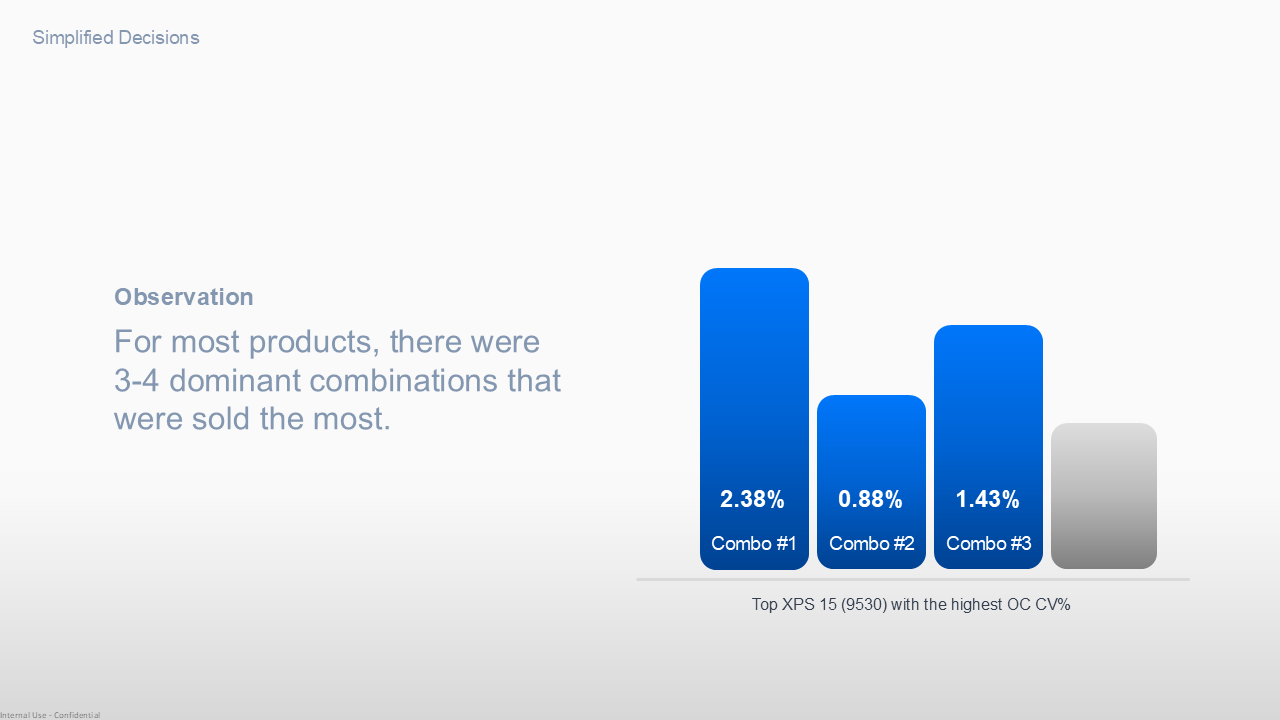
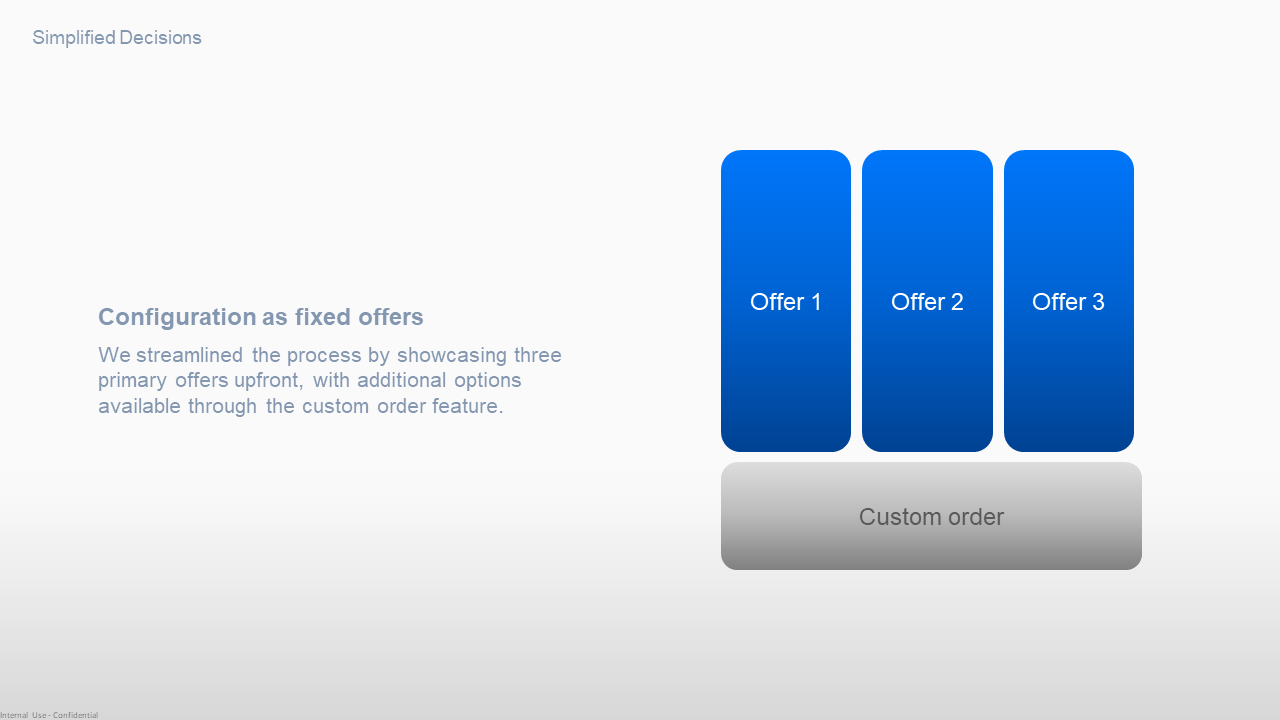

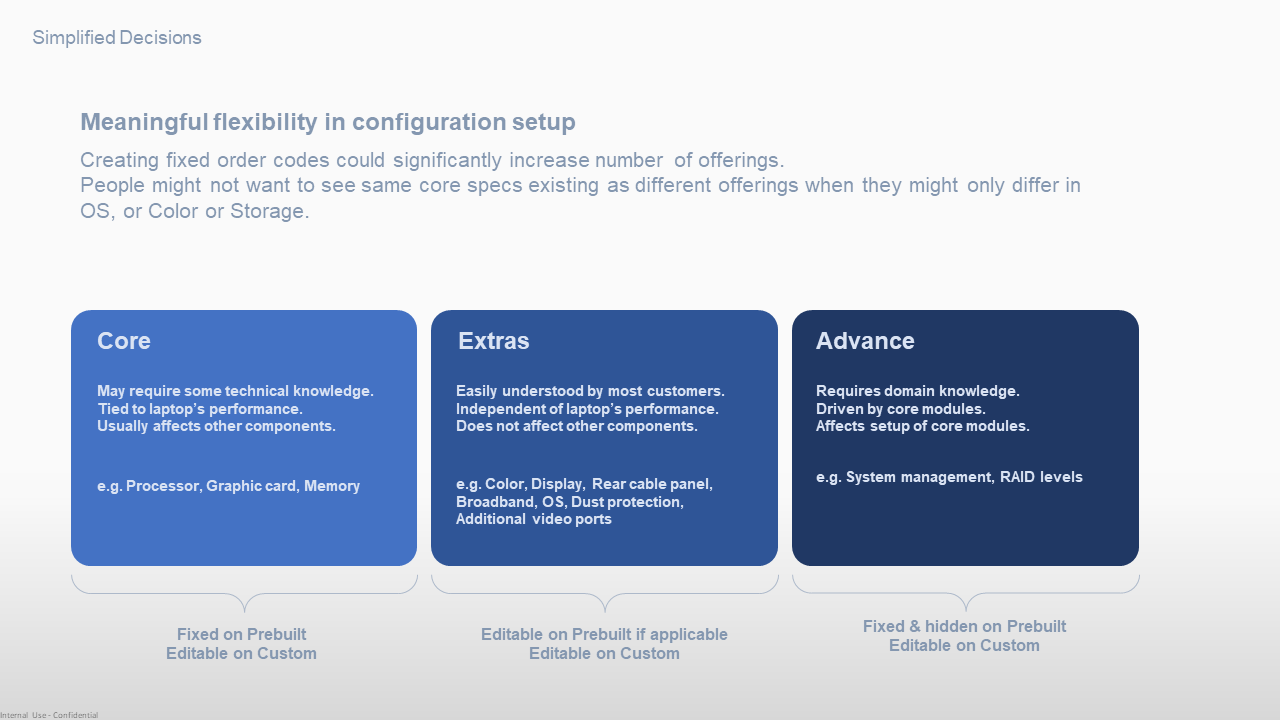


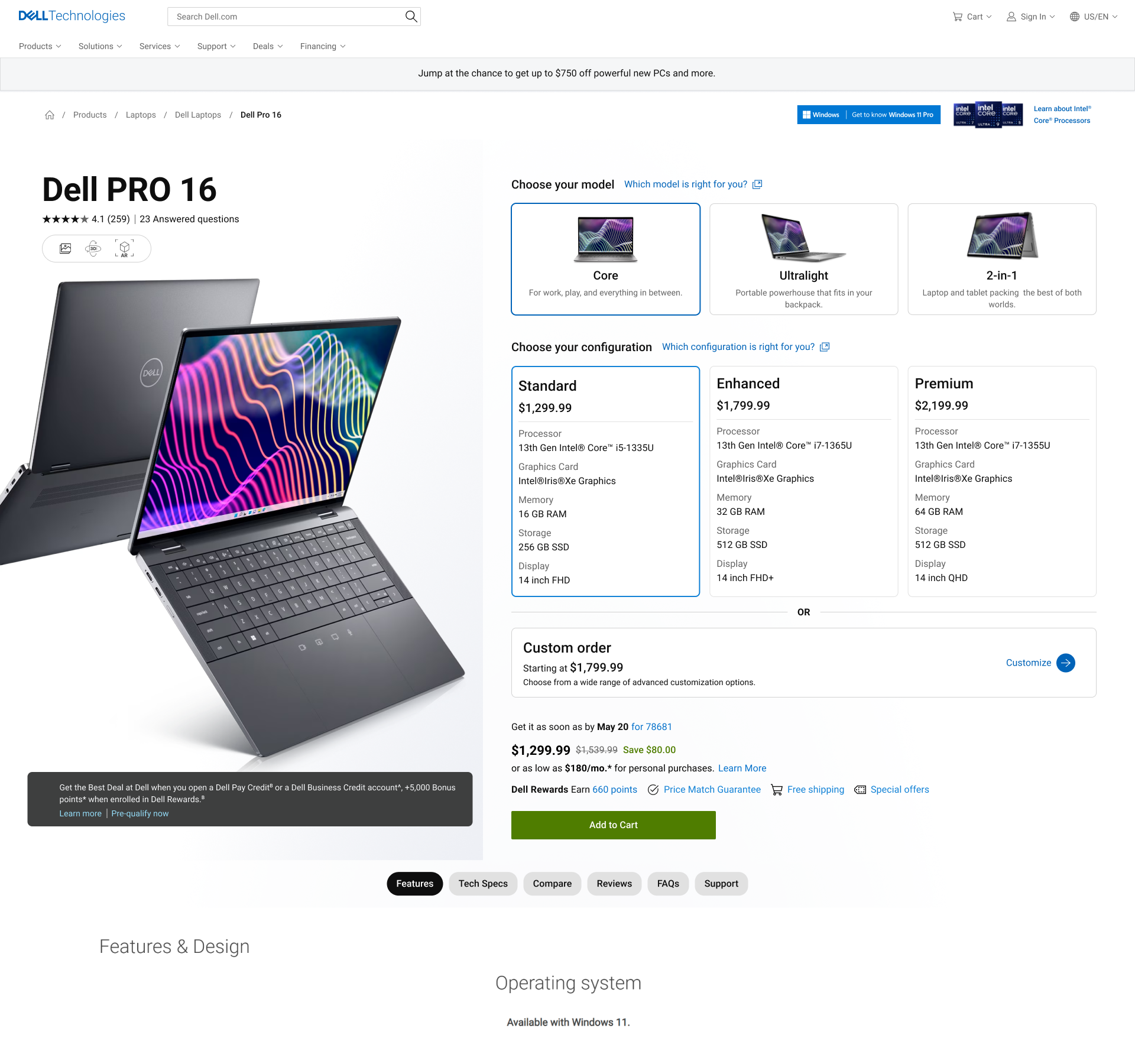
We analyzed all Dell laptop lines and their order codes, identifying 3–4 dominant build combinations that customers most often purchased. To reduce decision fatigue, we made these combinations the primary way to start building a PC.
Presenting them as side-by-side cards not only simplified selection but also opened opportunities for strategic pricing, such as the Goldilocks and decoy effects.Defining these fixed order codes also prompted valuable discussions about creating meaningful combinations—separating core specifications (like processor and RAM) from simpler, easy-to-understand choices (like color or accessories). With these insights, we moved forward to design the MVP.
.png)
.png)
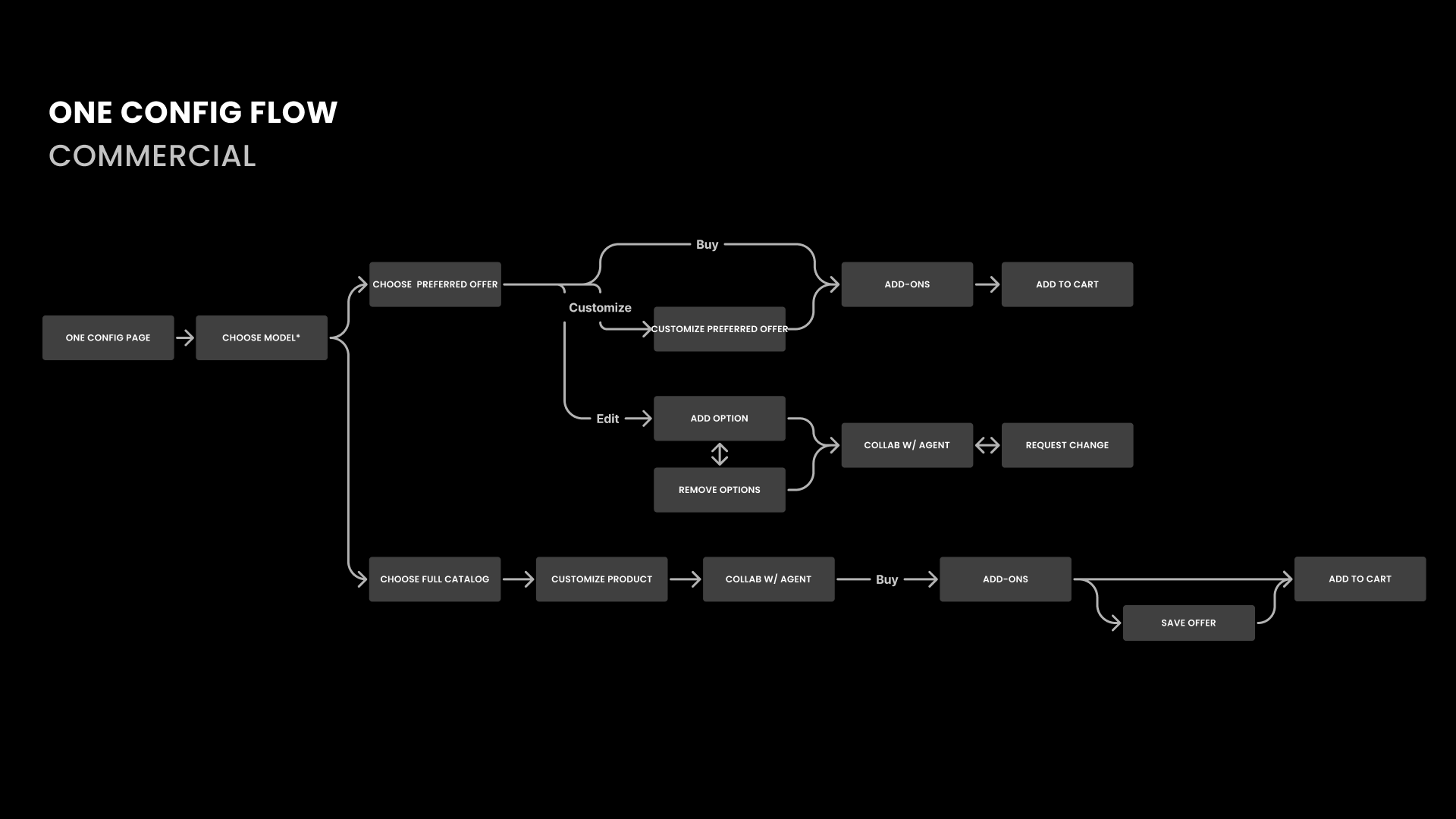

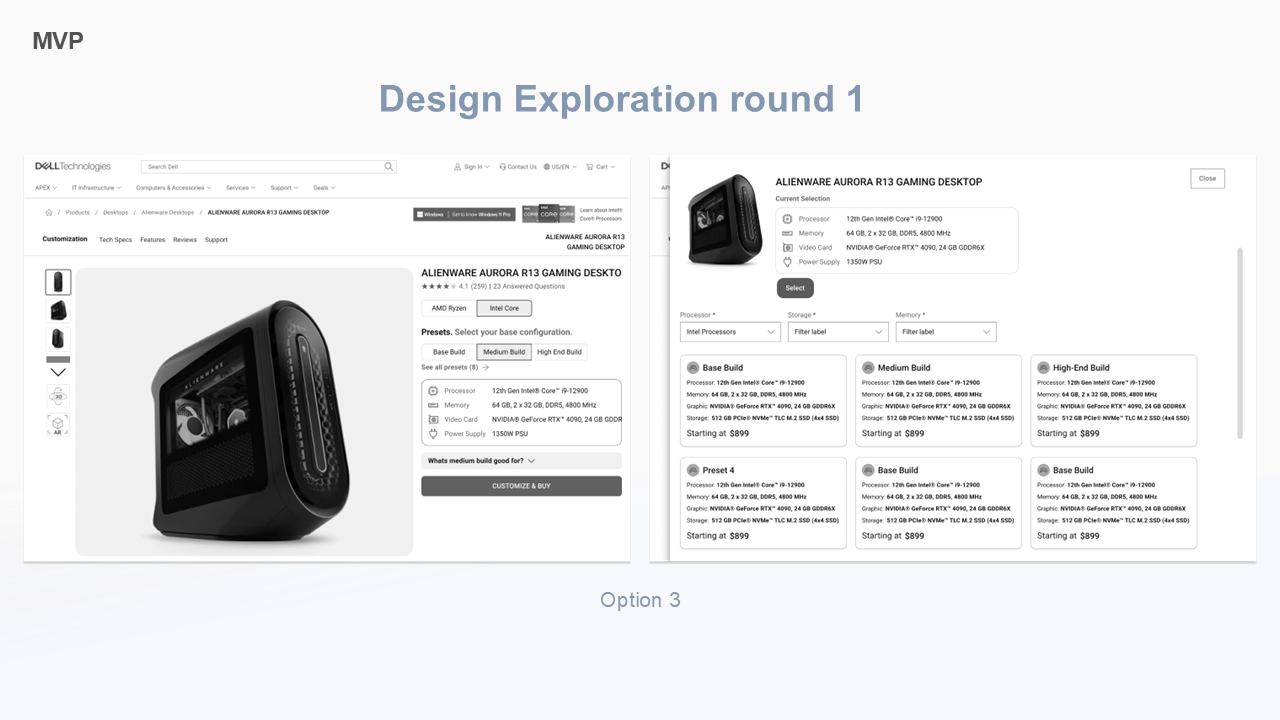
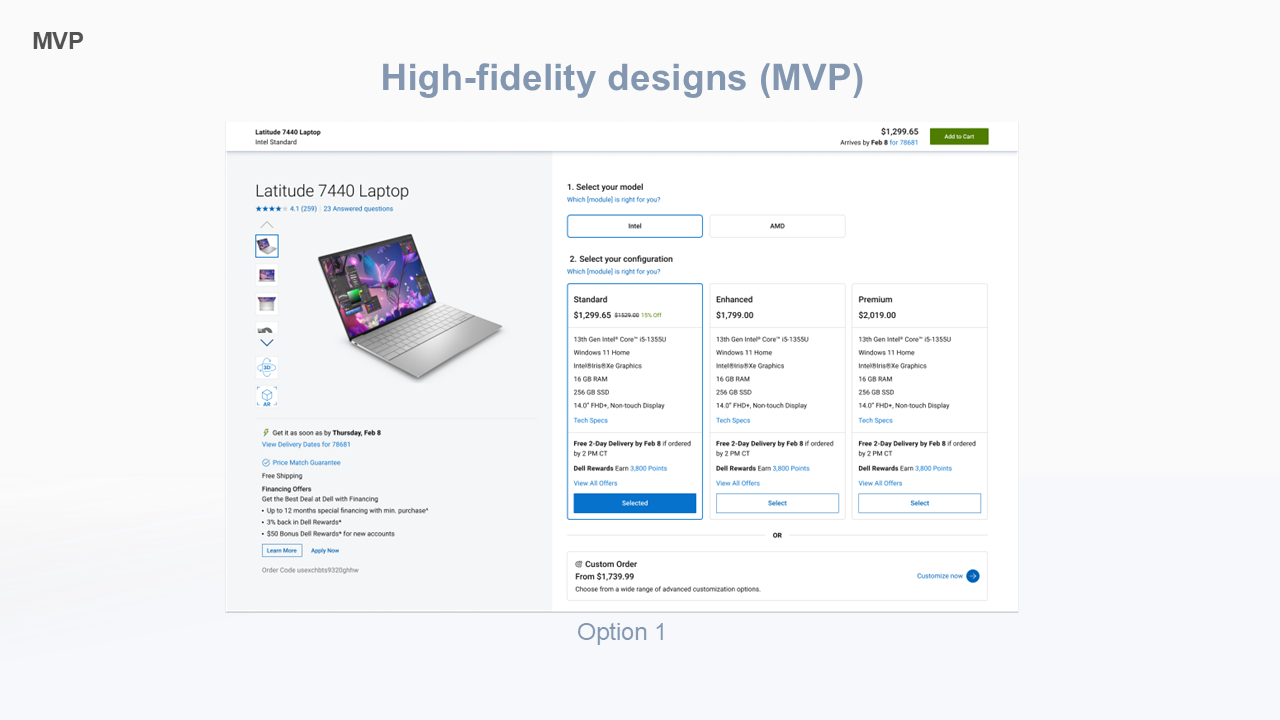
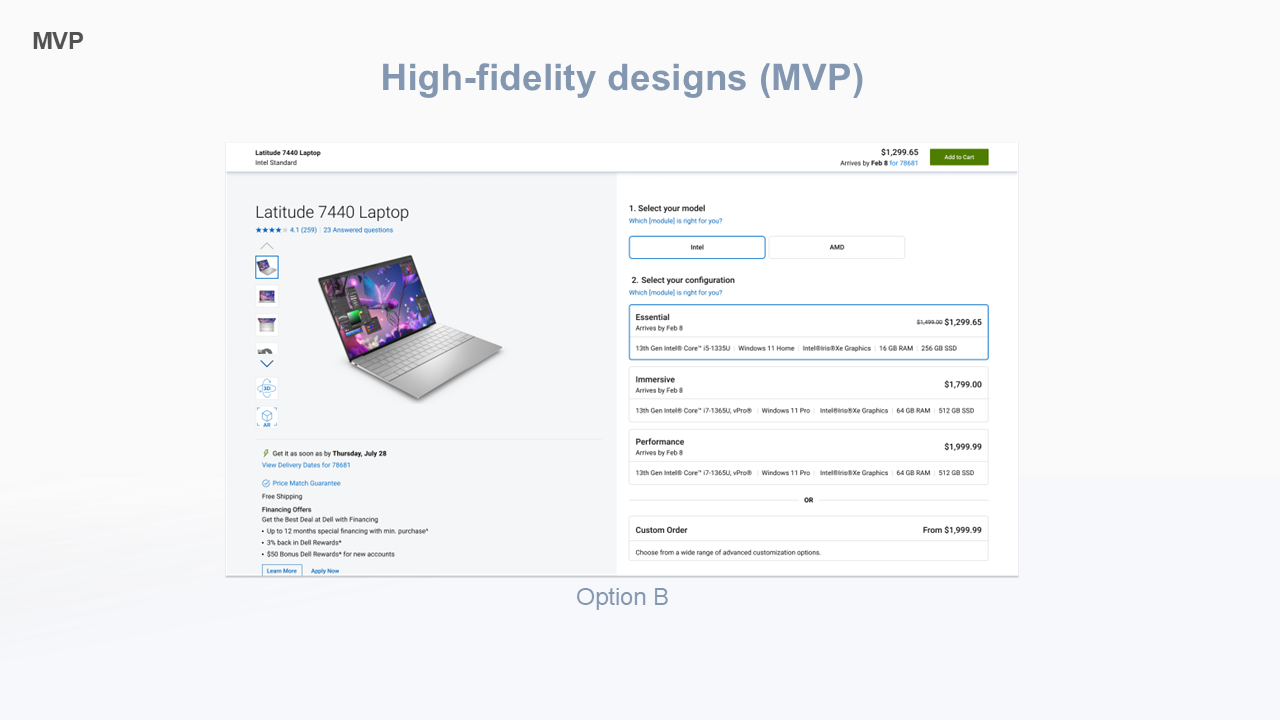
After running user tests, we aligned on an MVP concept: offer differentiated prebuilt systems on the product page, with the option to customize.
Our hypothesis: if customers could start with a well-matched prebuilt system but still retain the ability to tweak specs, we could boost conversion rates without taking away user agency.
We framed our research around three key questions:
Do customers choose different form factors?
Do they purchase prebuilt systems—and if so, what drives that choice?
How does this new flow perform compared to the current product page?
.png)
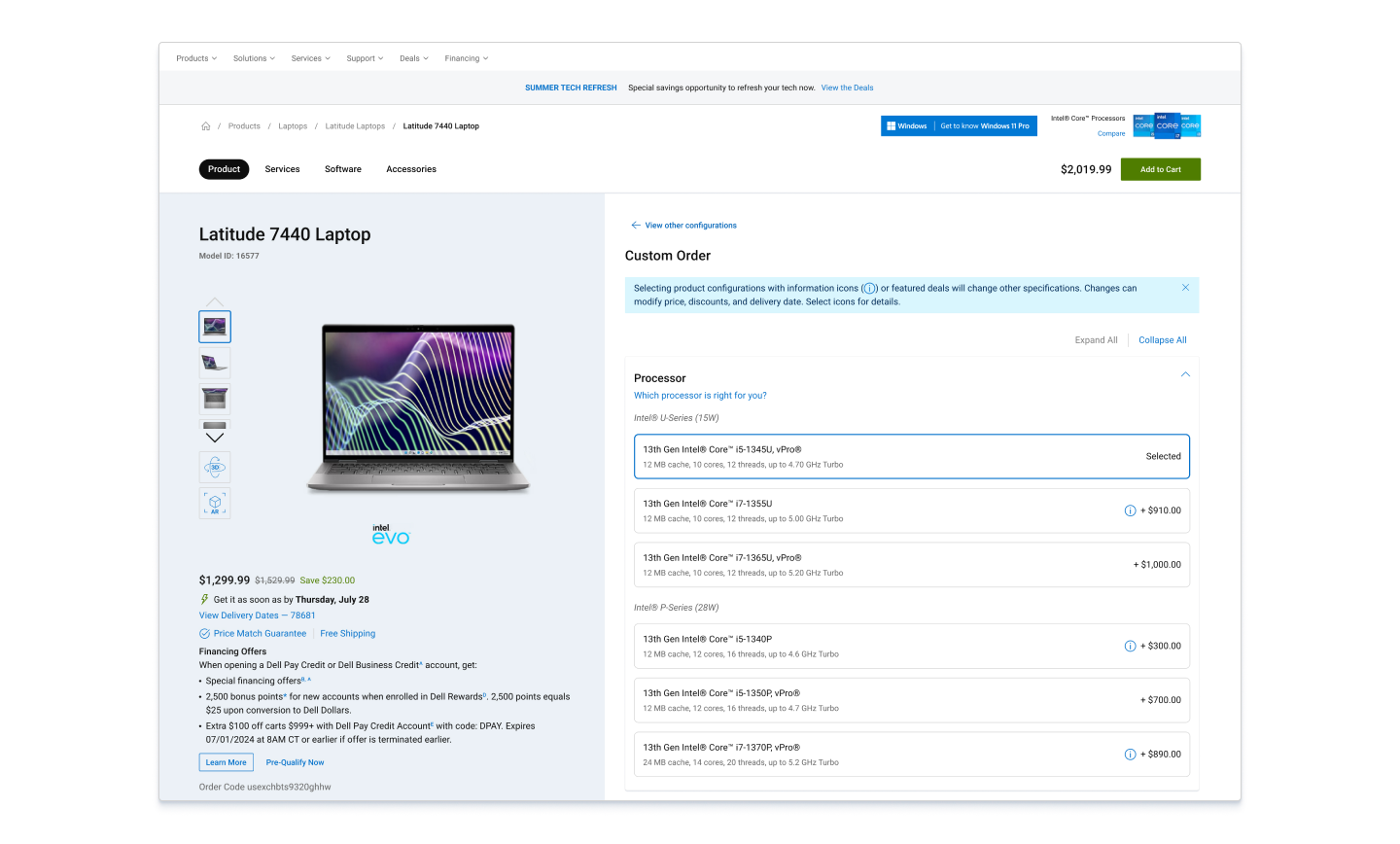
Insights from testing
We ran an A/B test (Test & Target) comparing the new design against the control version of the product page.
Key Results
+5.2% lift in average order value
+7.4% lift in revenue per visit
19% selected and modified prebuilt offers
9% went directly to “Build Your Own” (mostly gaming users)
7% clicked “Add to Cart” directly (lower-end models like Inspiron, G-Series)
40% engaged with “Build Your Own” after exploring prebuilt offers
25% engaged with prebuilt offers and then clicked “Add to Cart”
Additional Insights
Exit rates improved with the new design
We observed the Goldilocks effect—most customers chose the middle option when shown three offers
Gaming brands like Alienware & G-Series saw more customers going to “Build Your Own” rather than choosing prebuilts
The offer selection section drew more attention than the media gallery
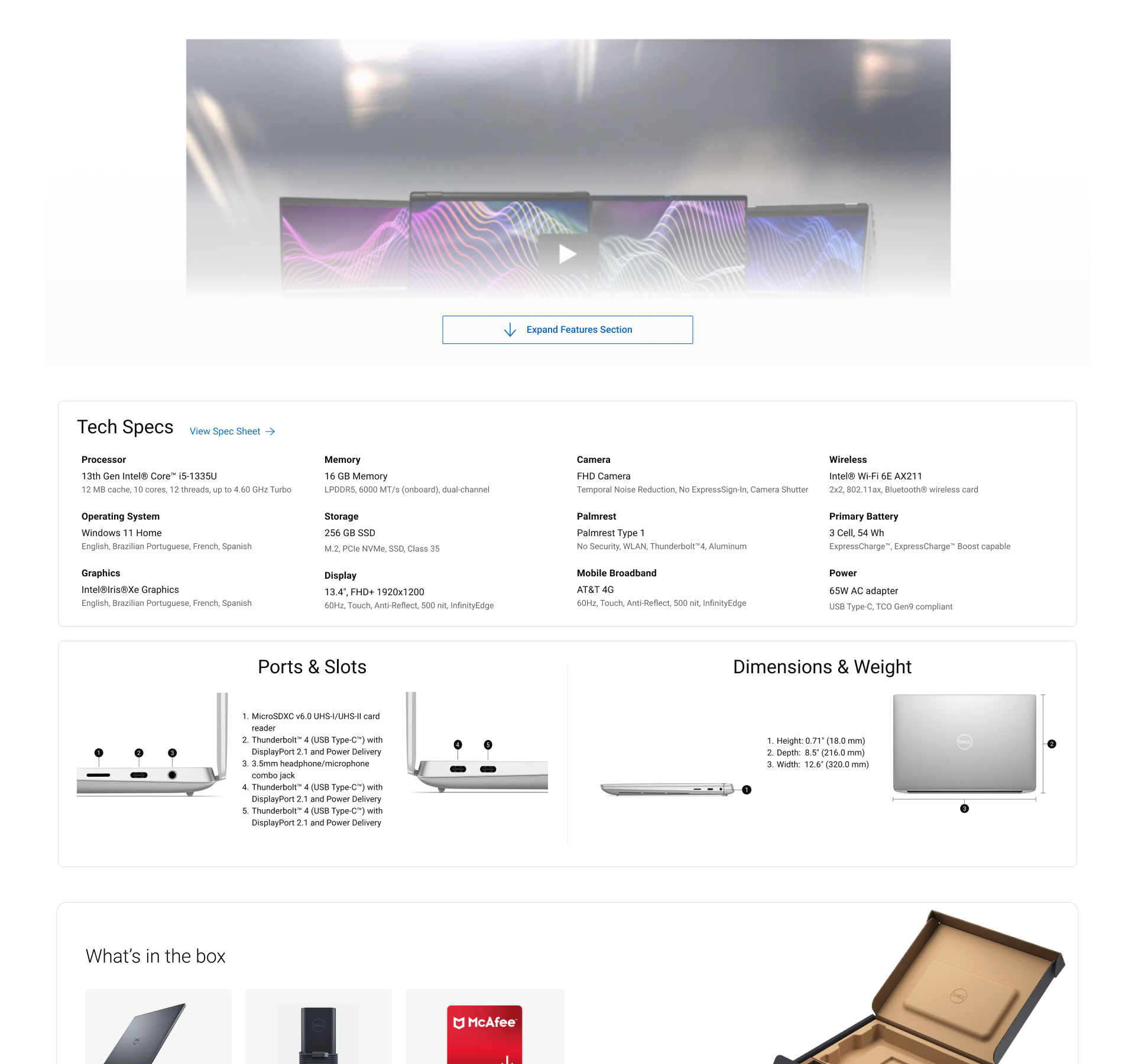
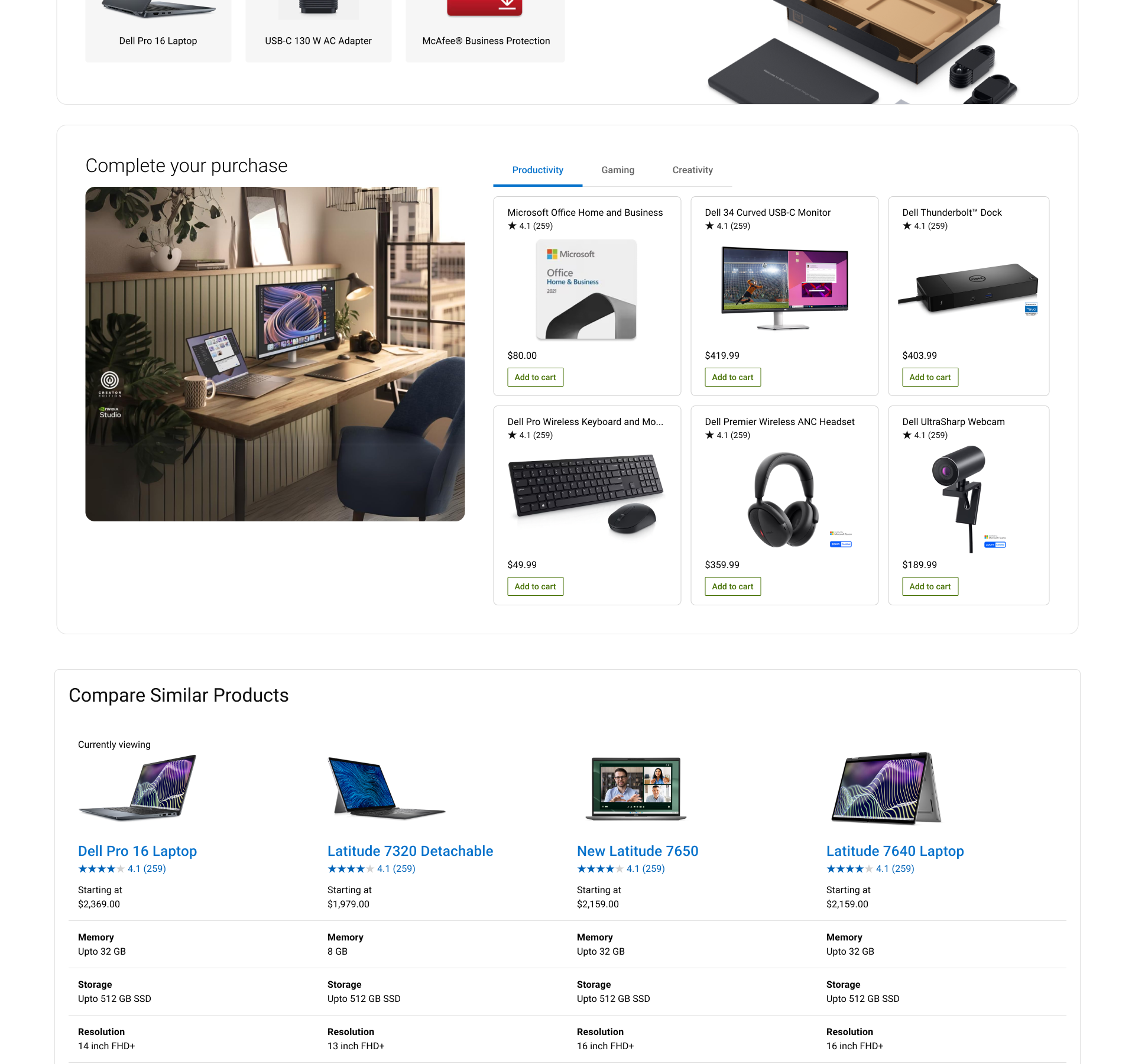
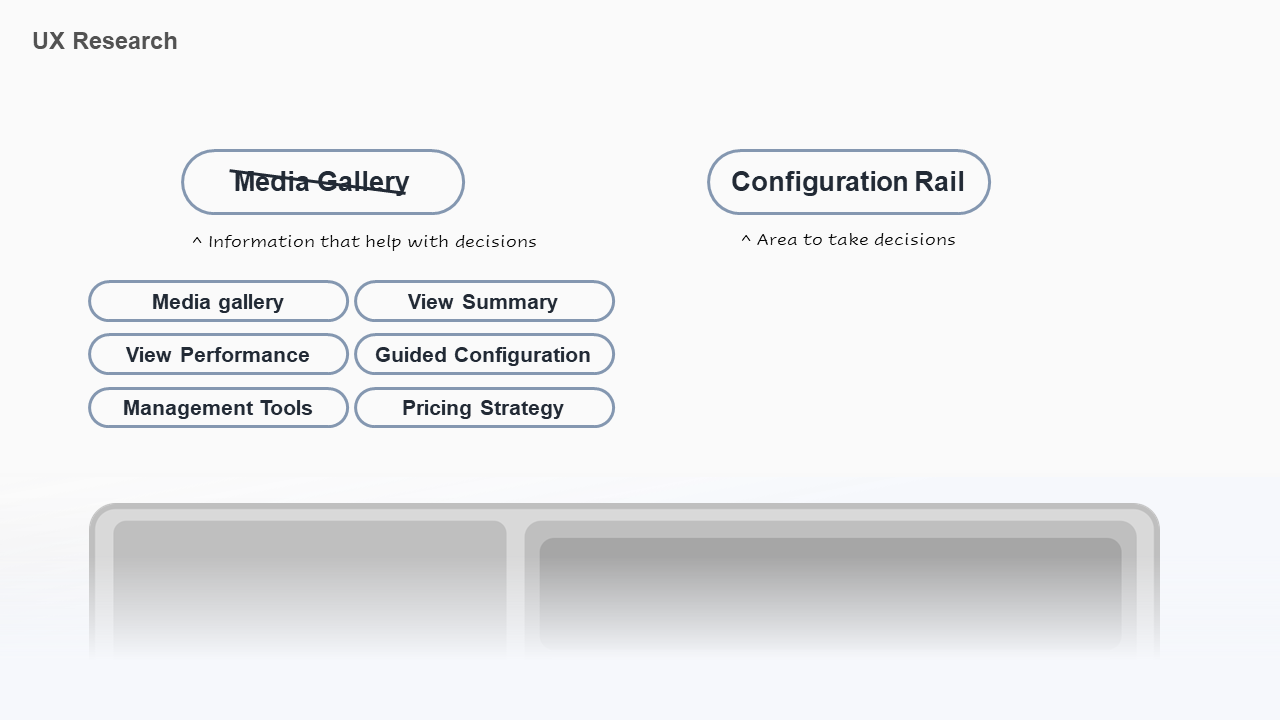
Once we simplified the first page of the One Configurator, we looked at how we can help guide customers to make well informed decisions. This took the shape of modular components that could be placed below the media gallery.
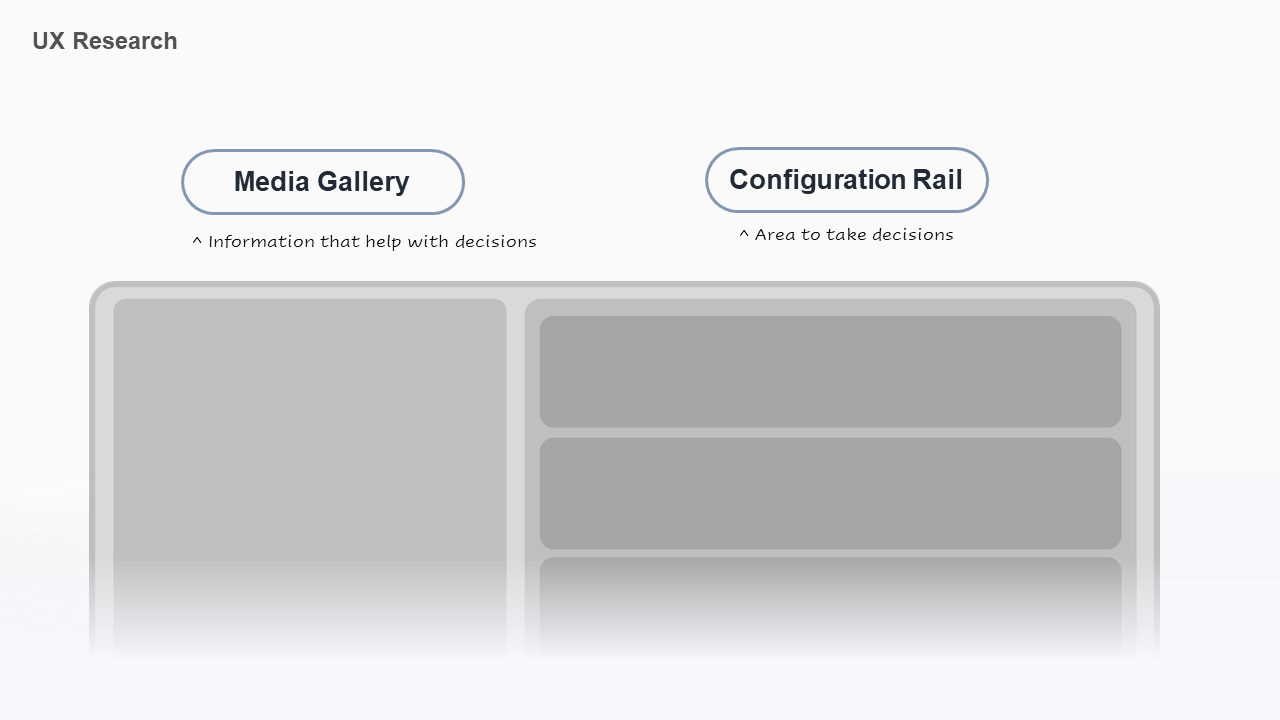

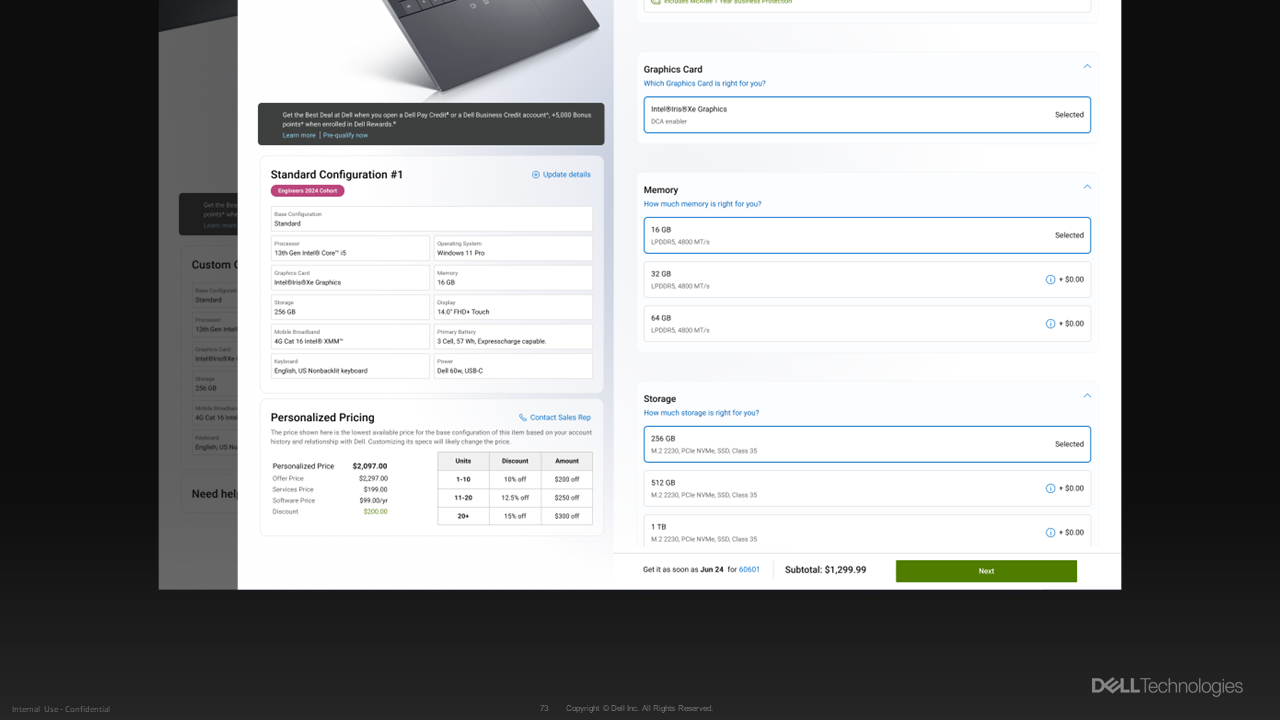
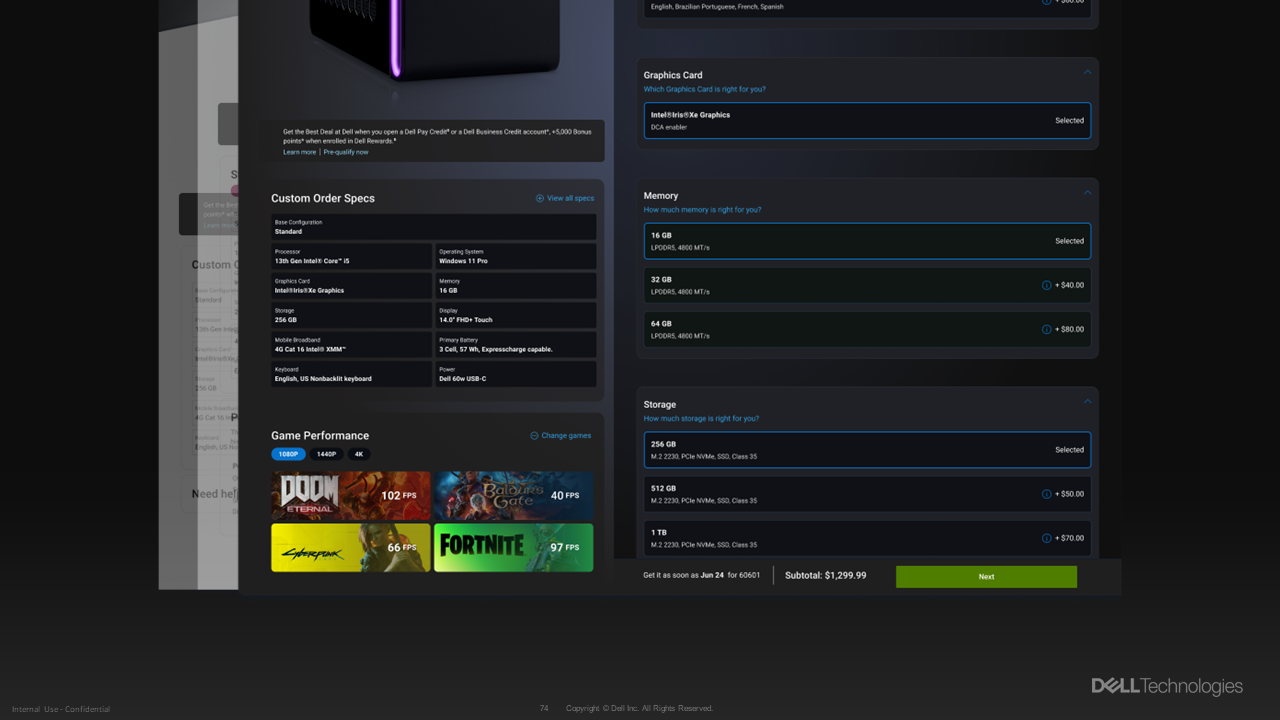
We conducted a Test and Target, which ran the new design against the control version of the product page. The new version had a 5.2% lift in average order value and 7.4% lift in revenue per visit.
.webp)
.webp)